Documenting modernism in dialogue with the Delta’s monsoon waters
Southern Vietnam hides one of the world’s highest concentrations of mid-century modernism, something I’ve written about at length. In Mỹ Tho, a quiet town in the Mekong Delta, modernism appears where you least expect it.
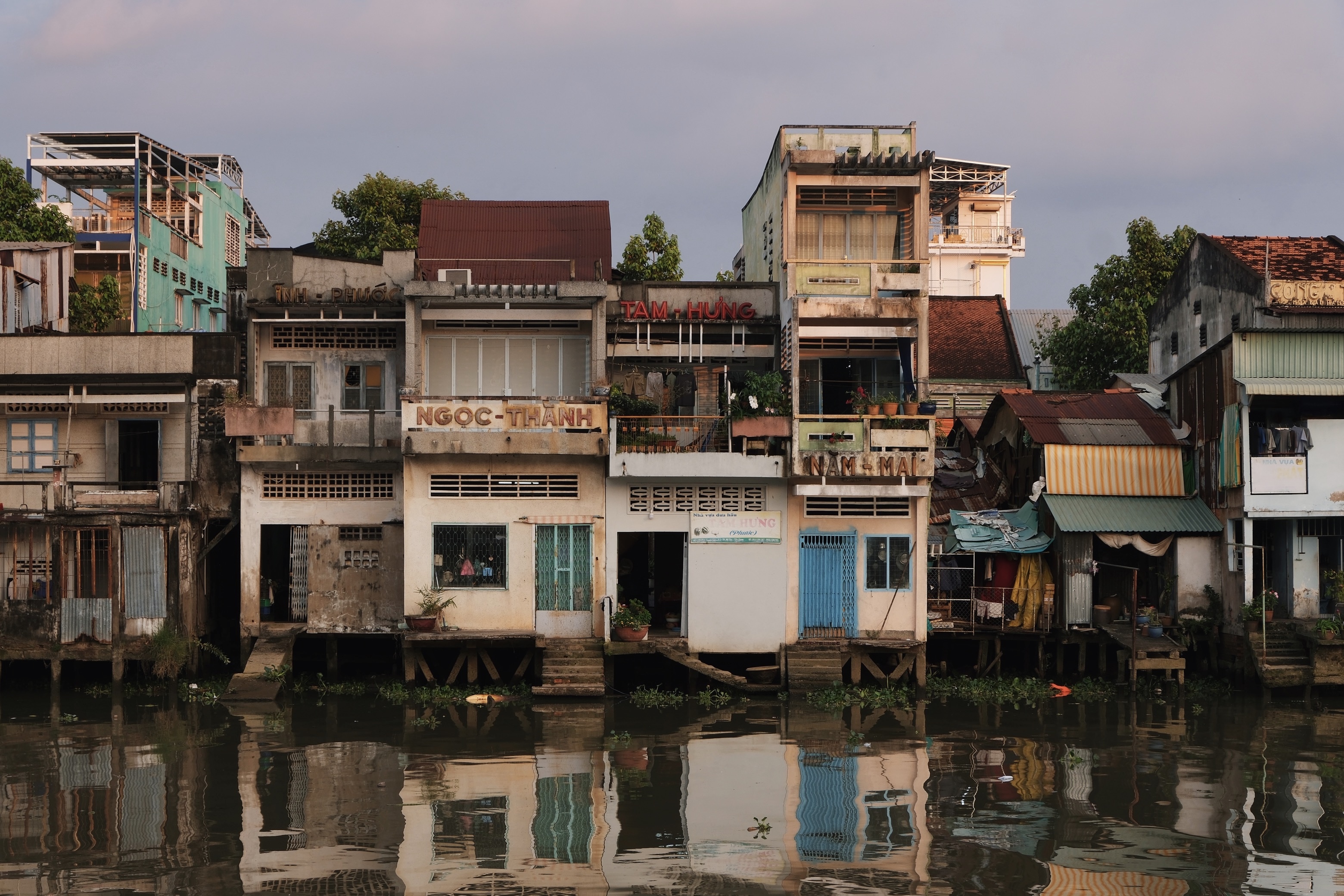
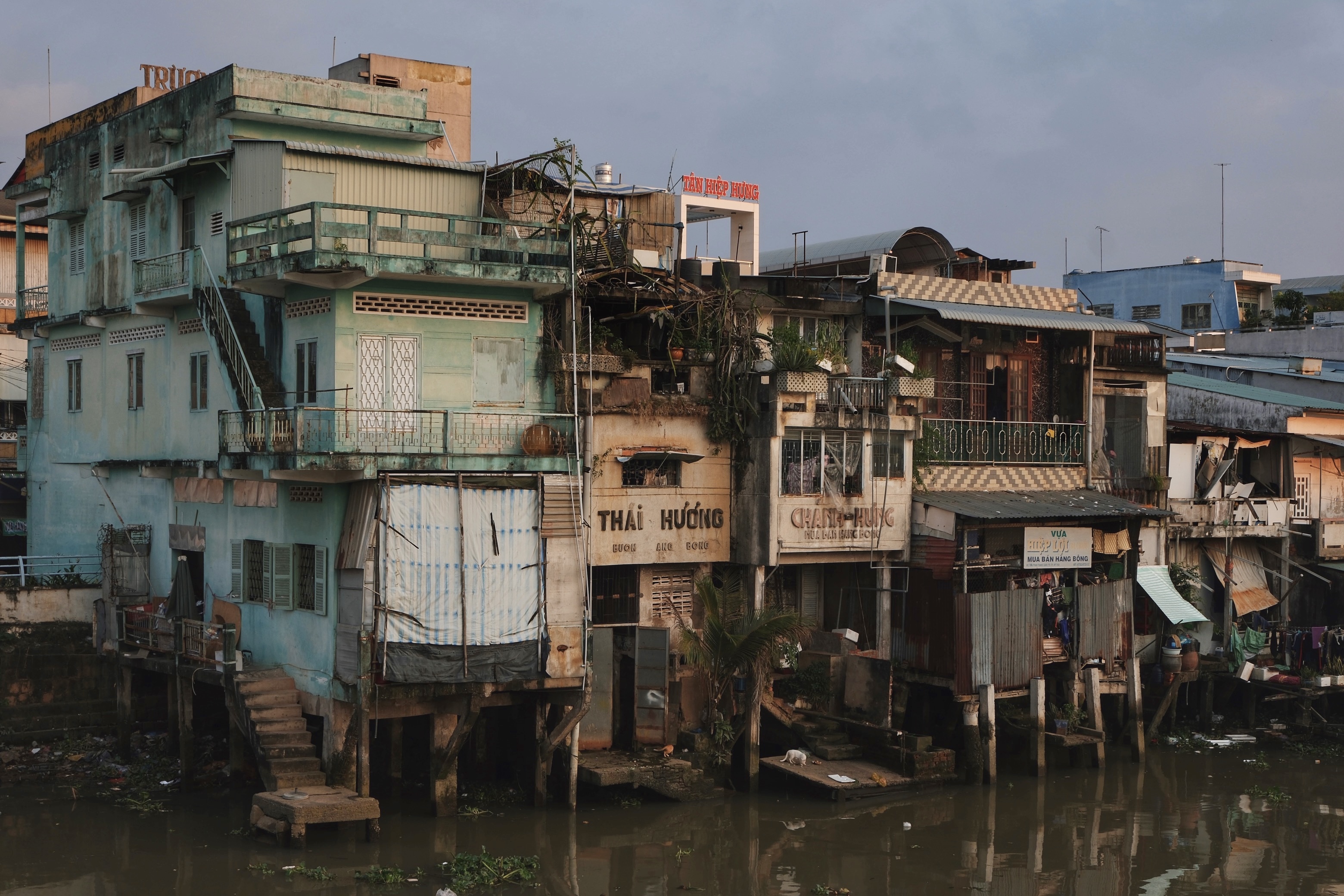
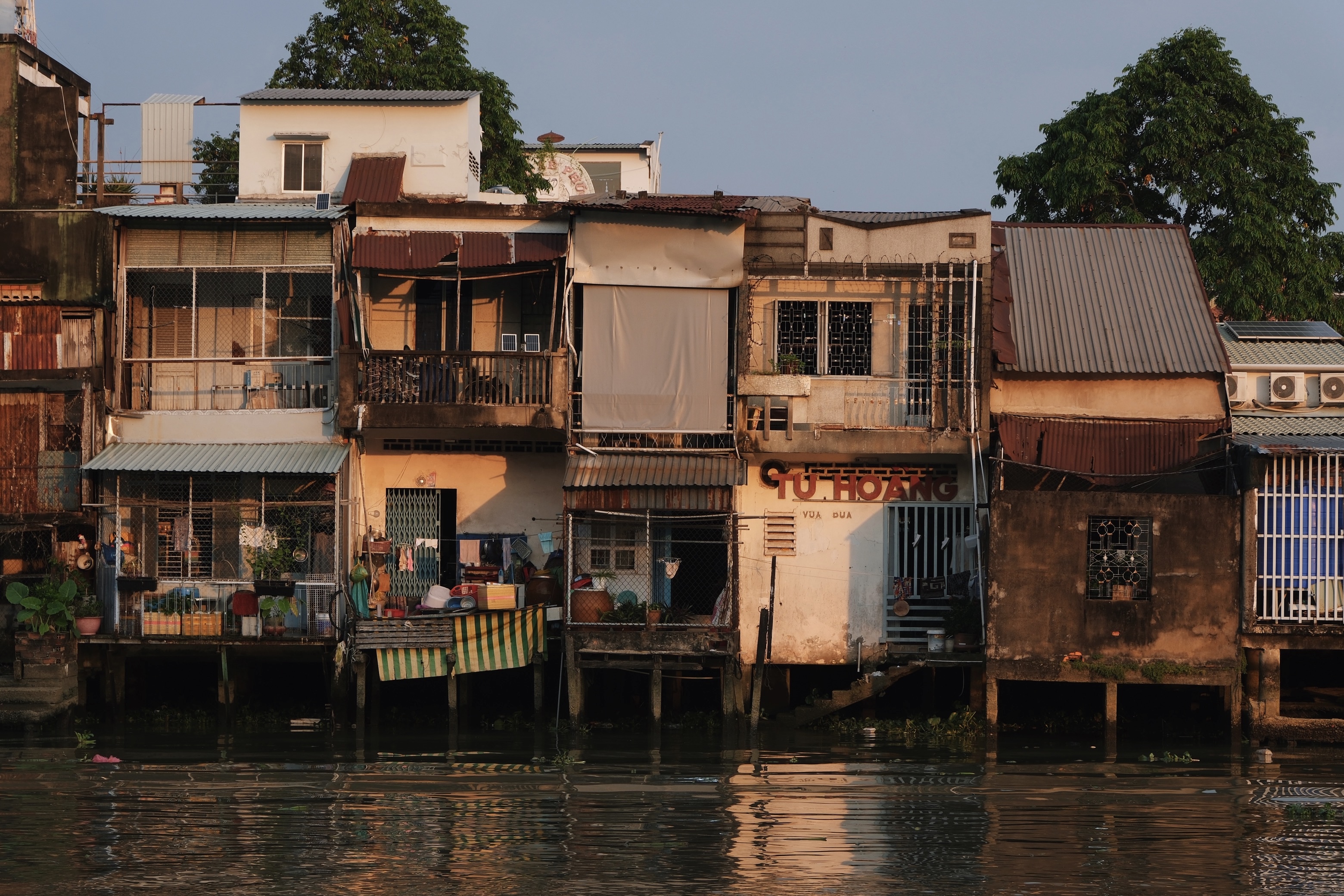
Mỹ Tho is a town I almost didn’t visit. As the closest Delta city to Ho Chi Minh City, it’s become the archetypal day-tour-with-50-other-tourists-in-a-bus kind of place. But stay there a bit longer, walk along the pier in the evening, and you’ll find something modernism has no business doing: standing on stilts.
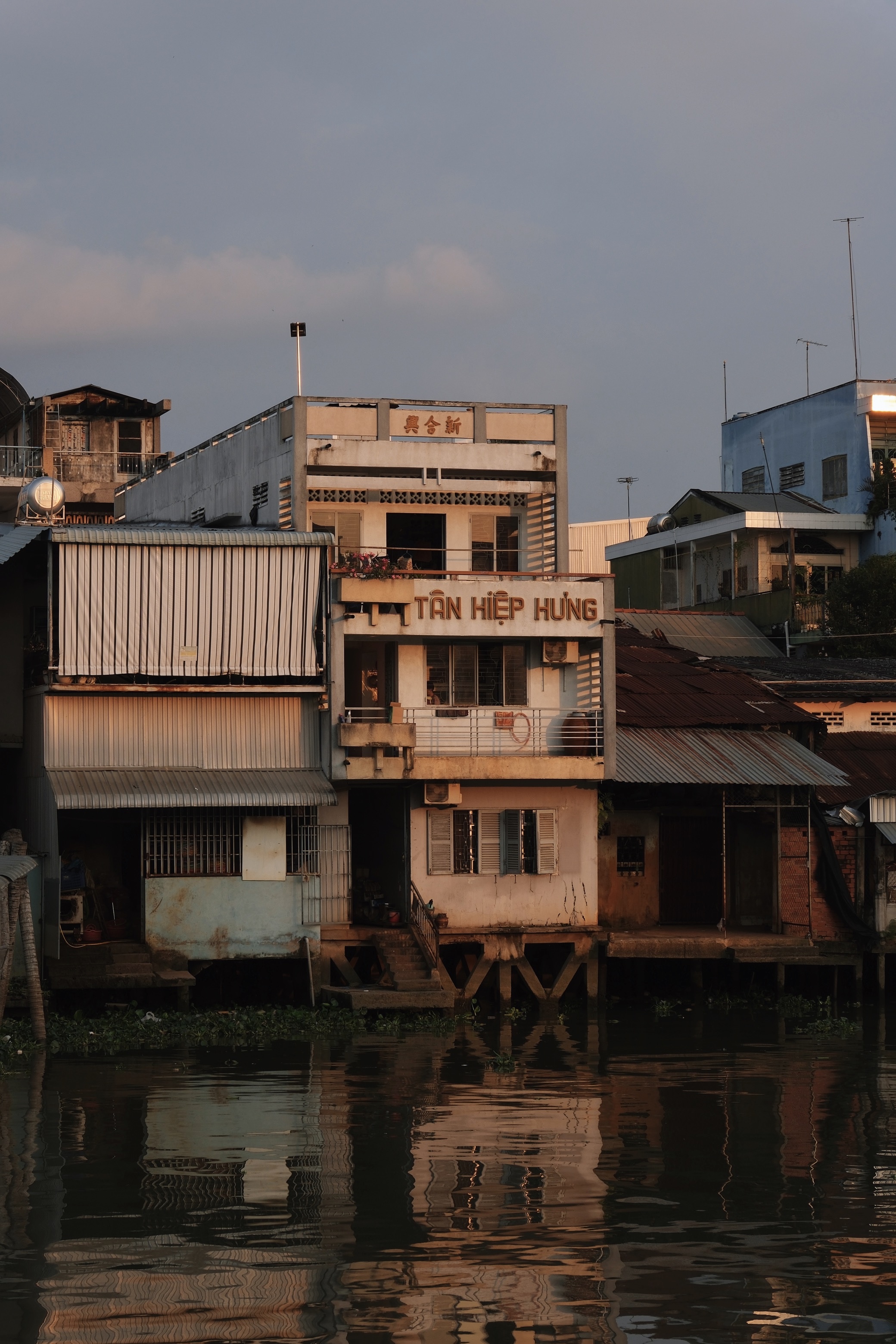
Water levels can rise up to three meters during the Mekong Delta’s monsoon season. This made stilt houses the region’s dominant vernacular housing type, as imprinted in the Delta’s popular image as its floating markets. Today, however, few Vietnamese would choose to live on the water. Those who can afford it build on solid ground instead. The floating markets tell the same story, now reduced to staged scenery for tourist cameras.
Architects Mel Schenck and Pham Phu Vinh have shown that modernism in Southern Vietnam became another vernacular, absorbed into everyday life in ways rarely seen elsewhere. These stilted modernist houses make that claim literal. Vernacular on vernacular; vernacular squared.
Stilts also appear in institutional modernism. The clearest example is the General Sciences Library in Ho Chi Minh City, whose front façade rests on concrete beams that plunge into a shallow pond — placed according to phong thủy, the Vietnamese adaptation of feng shui. Modernist architecture here rarely breaks with tradition, and neither does Vietnamese everyday life. Streets are getting newer, but ancestor altars and incense smoke still punctuate them. In Vietnam, the tension between modernity and spirituality is not so much resolved as maintained, like finding balance on stilts.
Written and photographed by Alexandra van der Essen

 alexandravanderessen.com
Leave a comment