Exploring the architecture, history, and design of The General Sciences Library in Ho Chi Minh City
This month, I had the pleasure of contributing to Building of the Month, the longest-running editorial series by 20th Century Society (C20), a leading UK heritage organization that campaigns to preserve the most significant architecture of the twentieth and twenty-first centuries.
I wrote about one of my favorite buildings in Vietnam: the General Sciences Library of Ho Chi Minh City, designed in 1971 by Bùi Quang Hanh and Nguyễn Hữu Thiện.
Although it sits right in the heart of District 1, it’s often overlooked in favor of more mainstream stops like the colonial-era Notre-Dame Cathedral. Don’t make that mistake. It’s a standout example of Vietnamese modernism—a refined distillation of rational design principles and traditional Vietnamese iconography.
You can read the article on C20’s website here, but I’m also sharing my complete photo series of the library below—along with my favorite excerpt from the text.
« The site of the library carries deep historical weight: it once housed the Maison Centrale de Saigon, a French colonial prison notorious for overcrowding, epidemics, and executions. Among those held there was the young revolutionary Lý Tự Trọng, executed at age 17, whose name now marks the street outside. Despite this sombre past, the library radiates quiet harmony, serving as a popular breathing space for locals amid Ho Chi Minh City’s hyper-dense urban fabric.
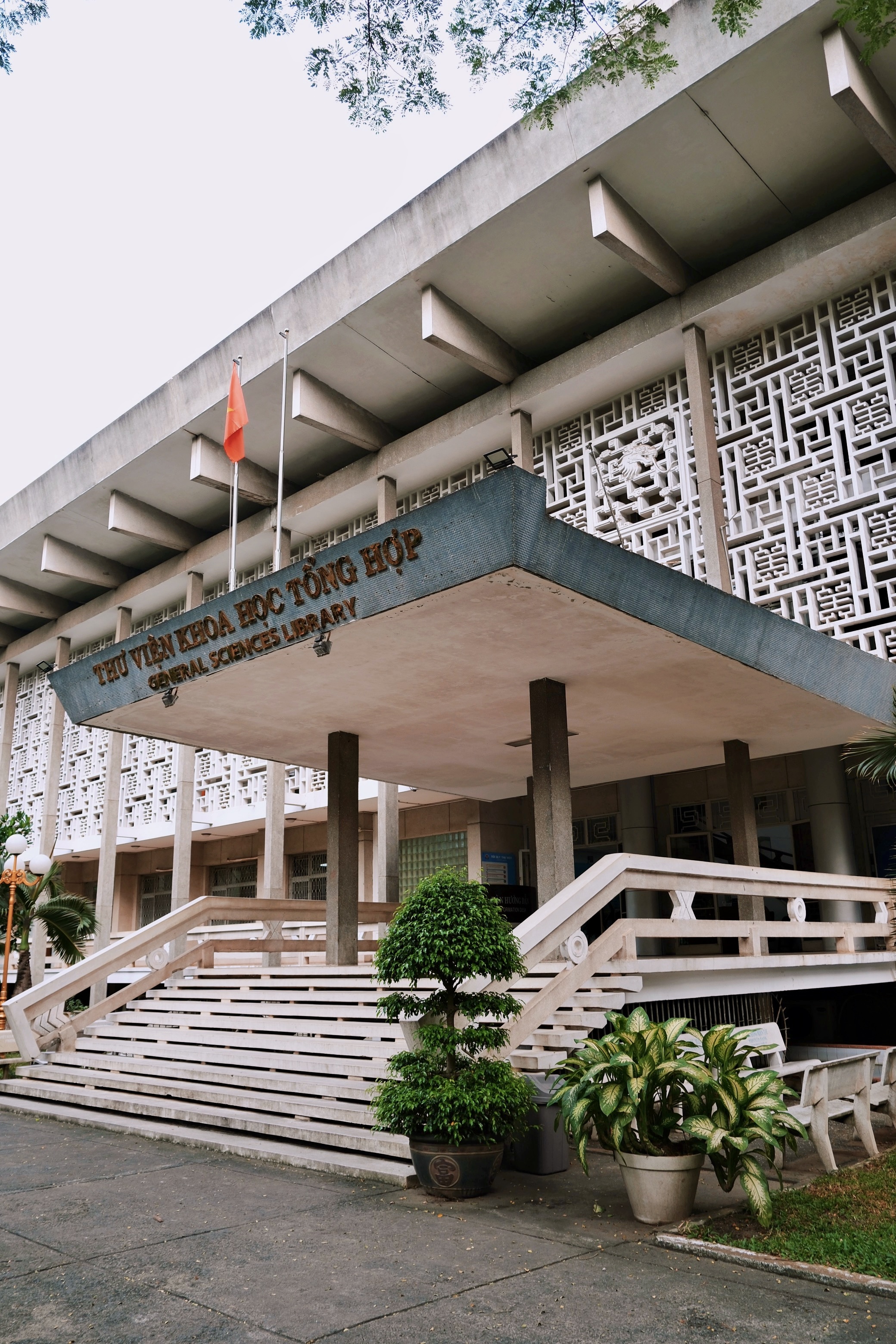
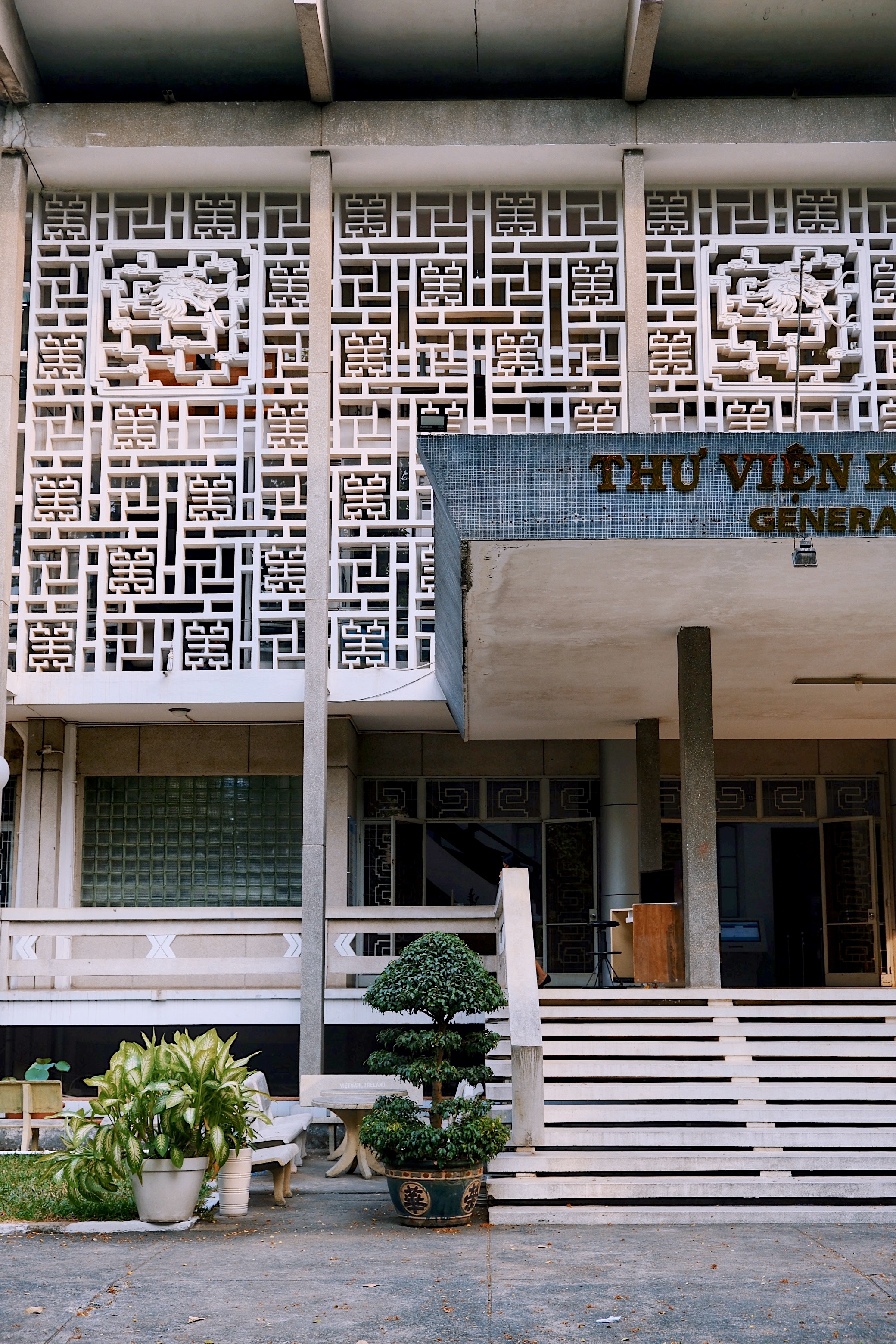
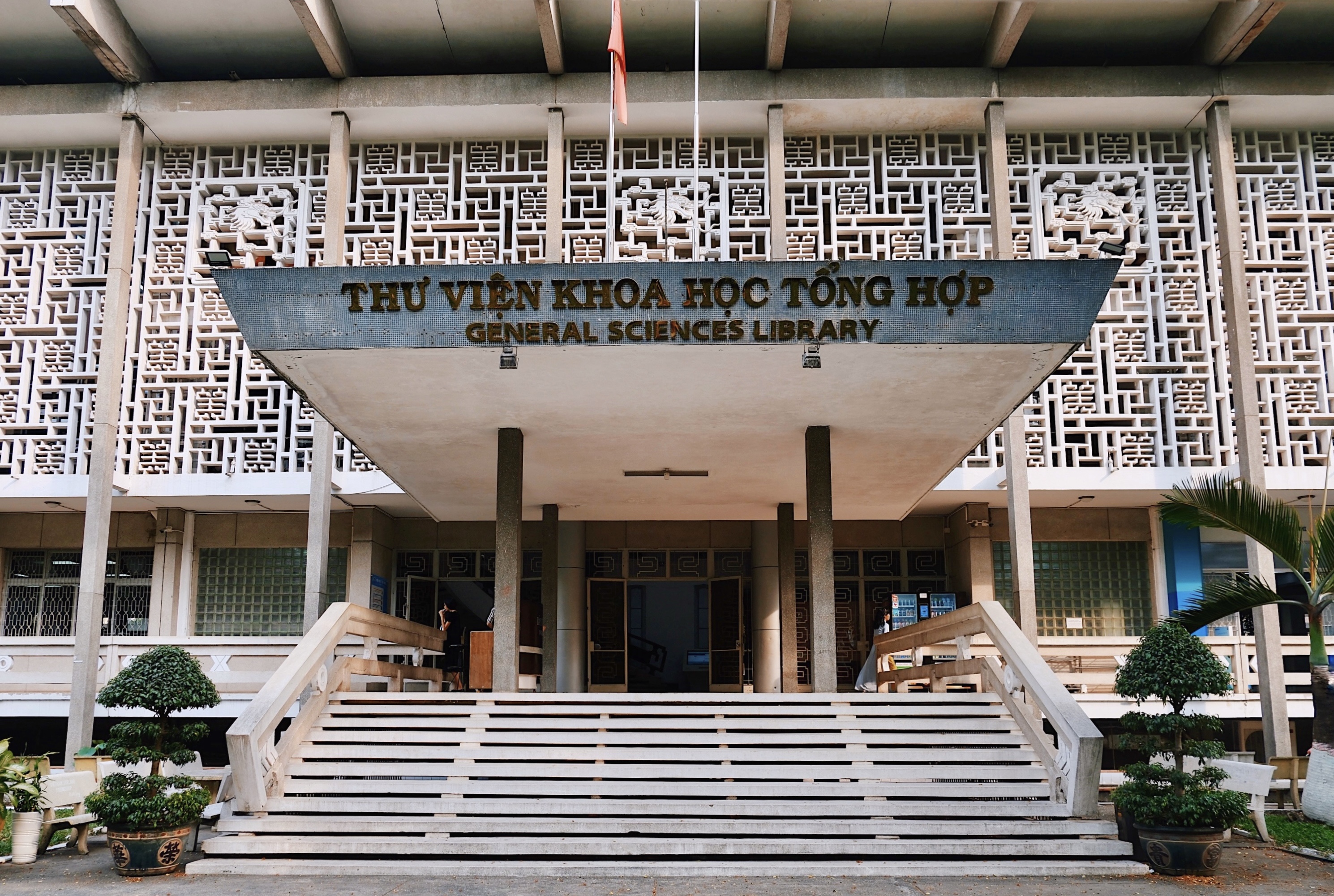
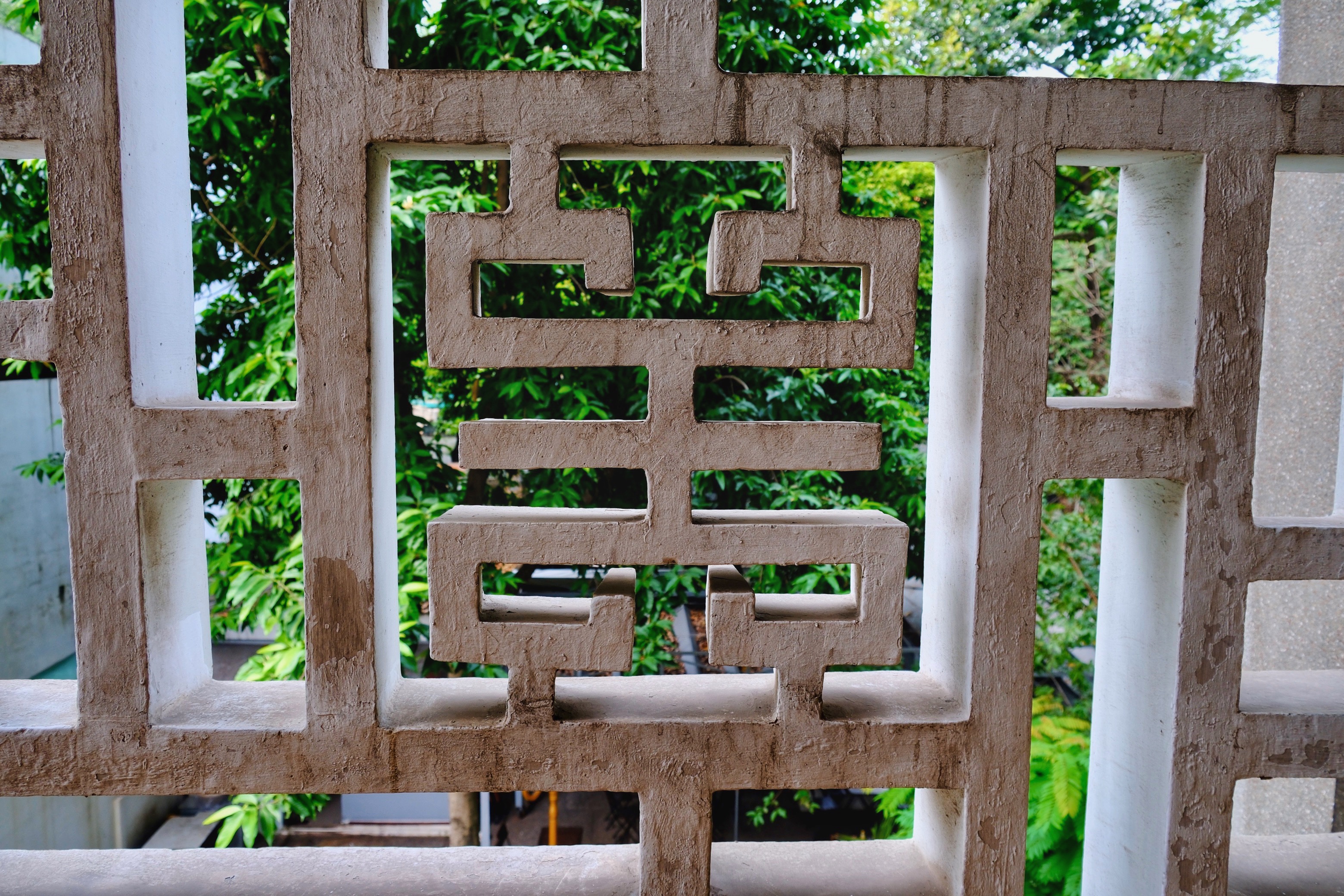
From a design perspective, the library exemplifies the intricate detailing and climatic intelligence characteristic of Southern Vietnamese modernism. As visitors walk through the entrance gate, they are immediately struck by the giant white geometric brise-soleil covering almost the entire façade. Both functional and decorative, this concrete screen deflects the intense afternoon sun, regulating the interior temperature for readers. Forming a double wall, it facilitates air circulation and provides ample canopy to shield from rain. Beyond its impressive size, this brise-soleil also stands out for its complex, lace-like patterns. Repetitive geometric forms are gracefully woven together with stylized motifs drawn from Chinese calligraphy. Phạm Phú Vinh, Vietnamese architect and author of Poetic Significance: Sài Gòn Mid-Century Modernist Architecture, describes the library as being ‘wrapped around by a curtain,’ its surface so large that it becomes a kind of fabric. The delicate concrete detailing, interspersed with touches of enamelled mosaic elsewhere on the façade, produces constantly shifting patterns of light—like shimmering embroidery on fabric. »
Written and photographed by Alexandra van der Essen
Main building and its giant, lacy brise-soleil

Concrete beams falling into the water pond


Traditional & abstract iconography


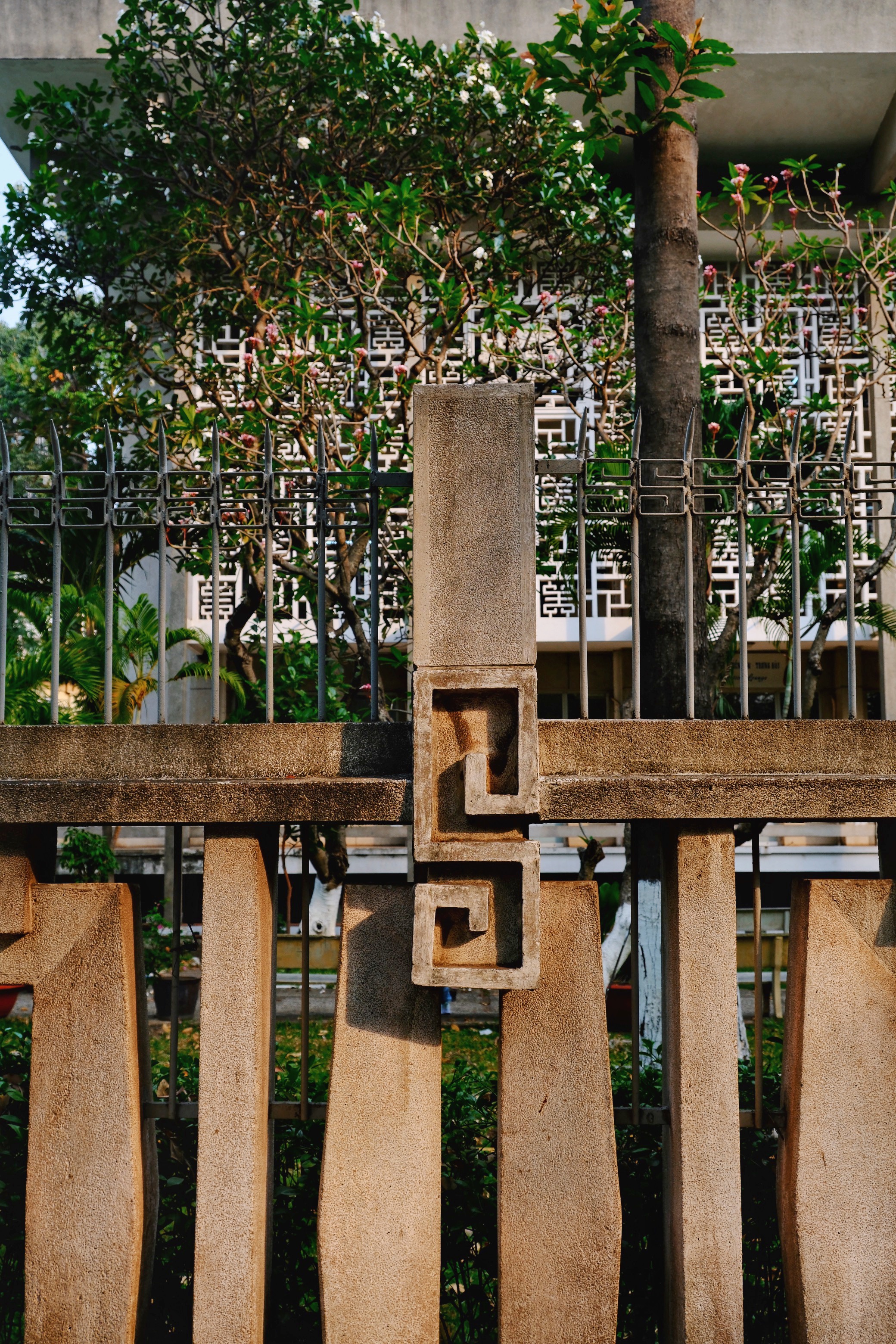
Focus on the brise-soleil detailing

 alexandravanderessen.com
Leave a comment