Written and photographed by Alexandra van der Essen
When I told people I was going back to Vietnam because I fell in love with its modern architecture, I was met with disbelief. Few realize that South Vietnam is an unrecognized epicenter of modernist architecture, home to what might be the world’s highest concentration of modernist buildings.
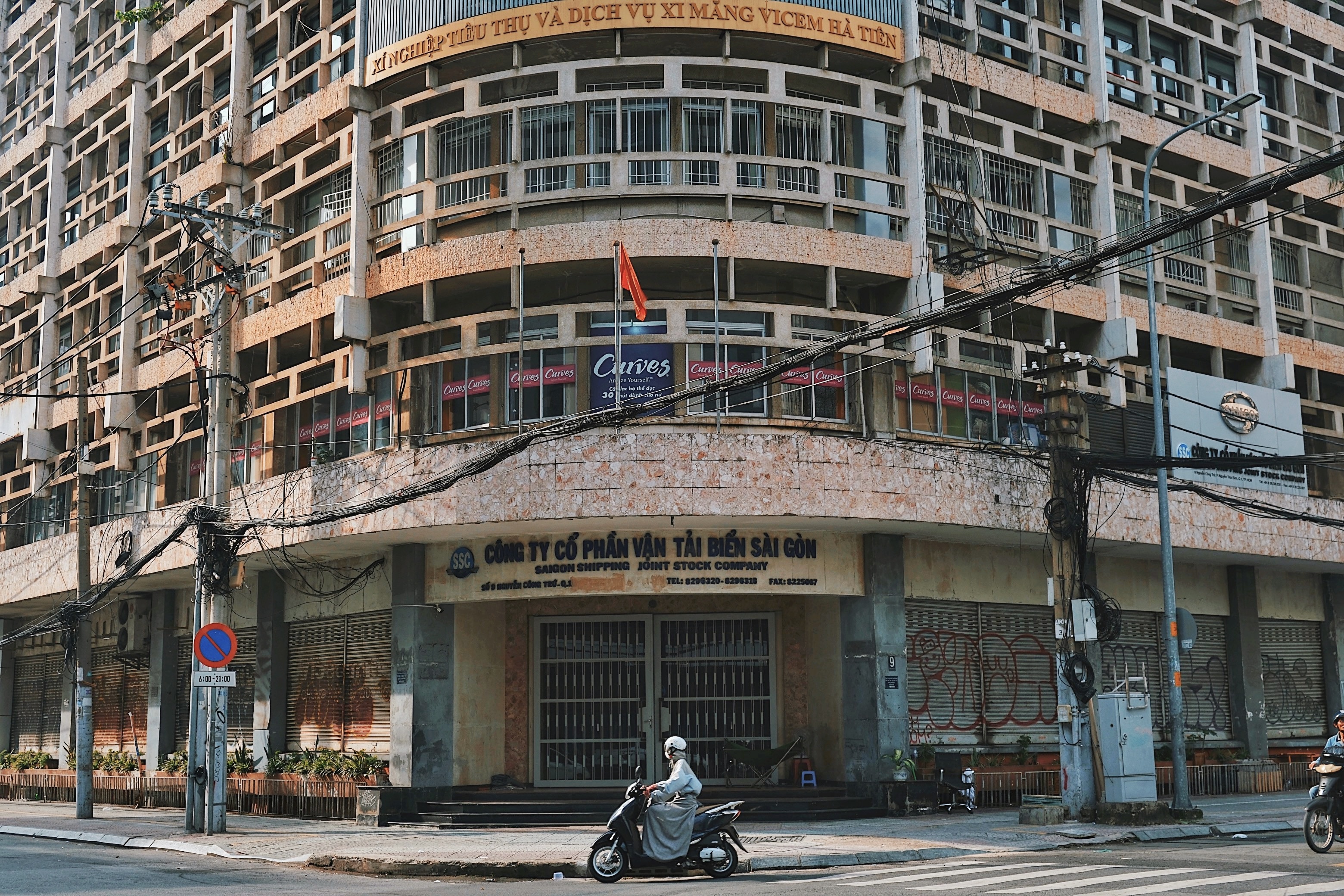
I had my first encounter with South Vietnamese modernism in March 2024, crossing into the Mekong Delta by bus from Cambodia. As we drove deeper into Vietnam, I sensed a shift: an aesthetic electricity markedly different from its neighbors Laos and Cambodia. My intuition was confirmed at our final stop in Can Tho, the Delta’s largest city. Camera in hand, I found myself frantically photographing every street corner, mesmerized by an architectural vocabulary I’d never encountered. Infinite variations of geometric forms emerged from the facades, punctuated by over-the-top commercial signs in vibrant primary colors.
“I felt like I was in architecture heaven,”
quoted Mel Schenck, author and renowned specialist in South Vietnamese modernism. So did I.
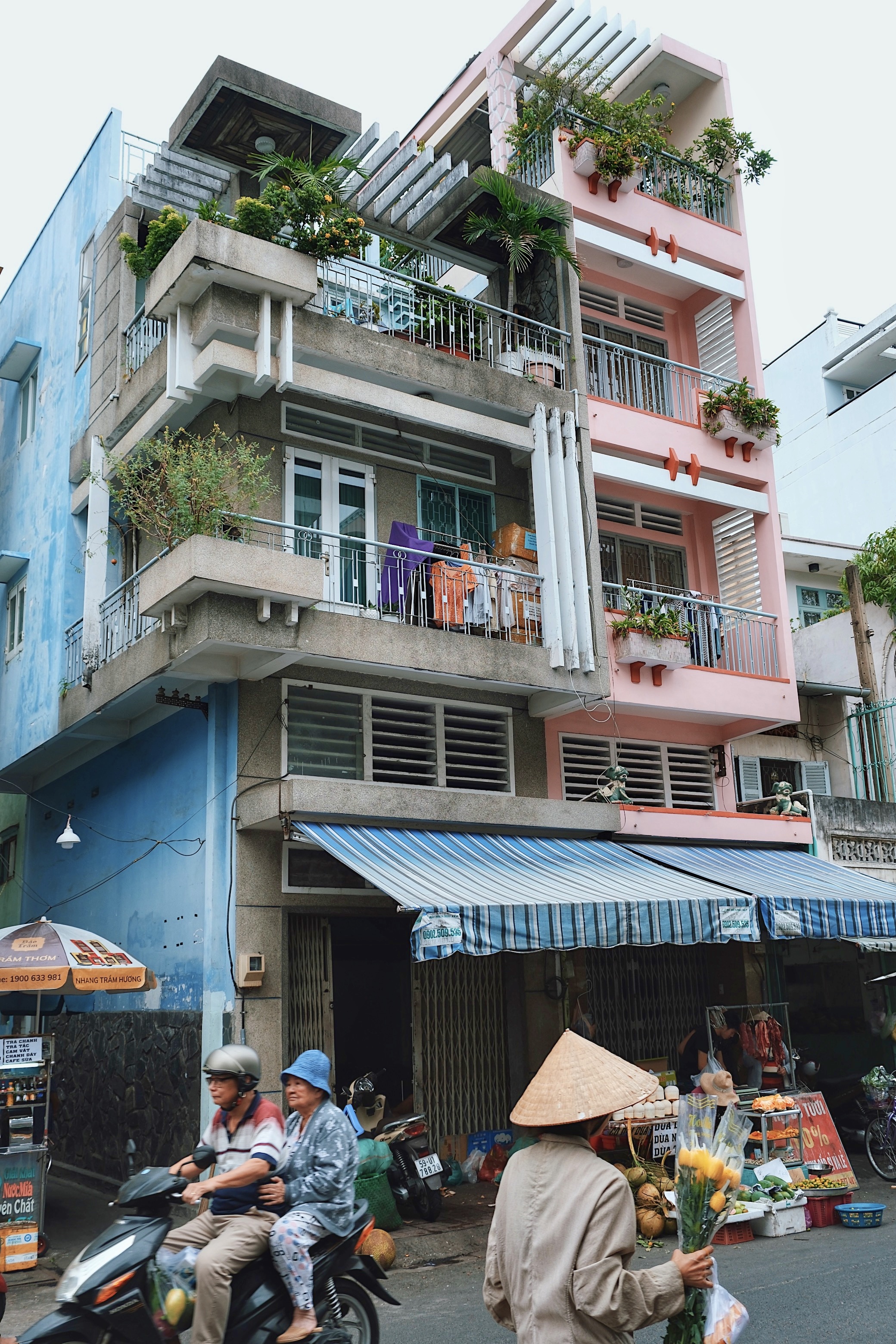
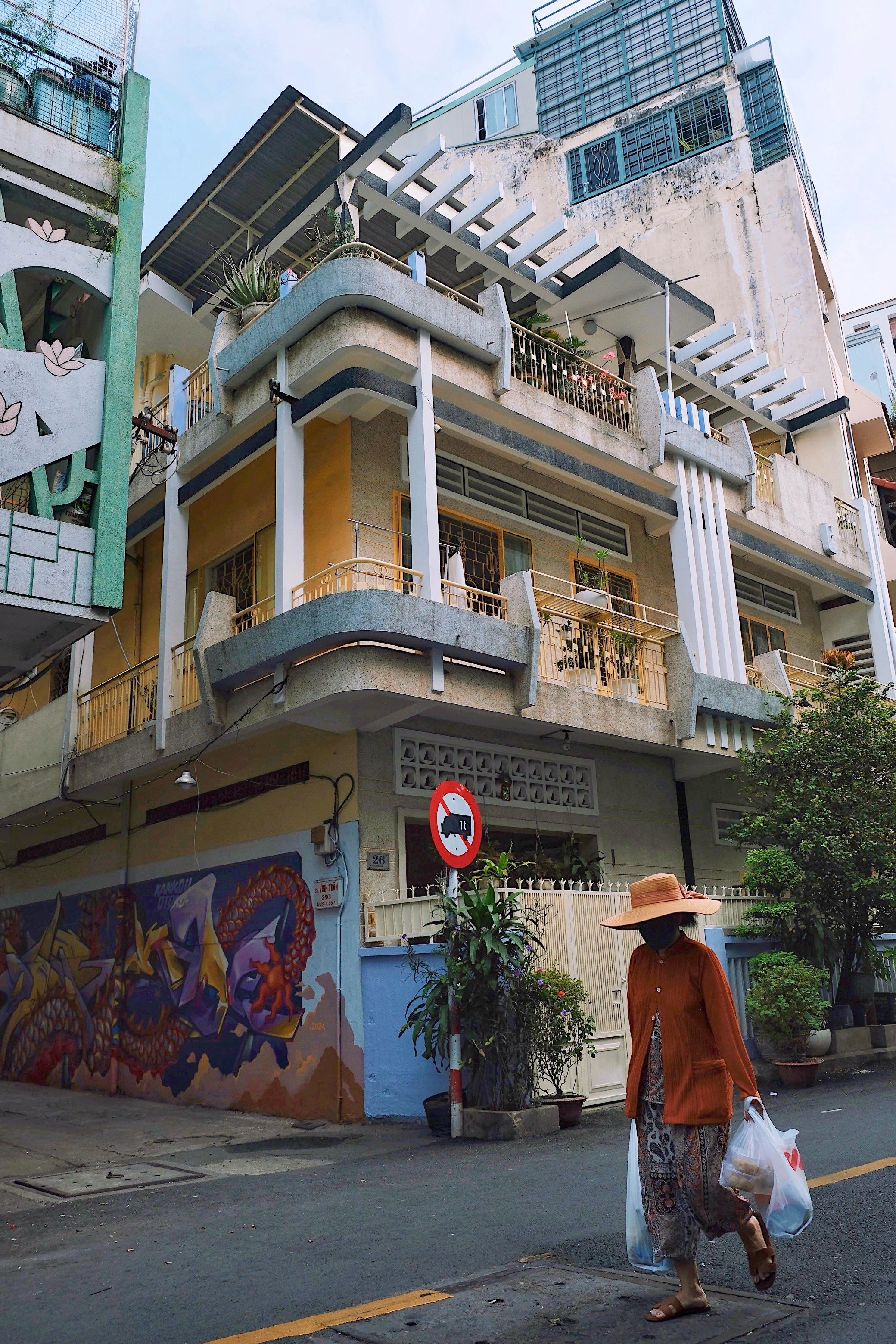
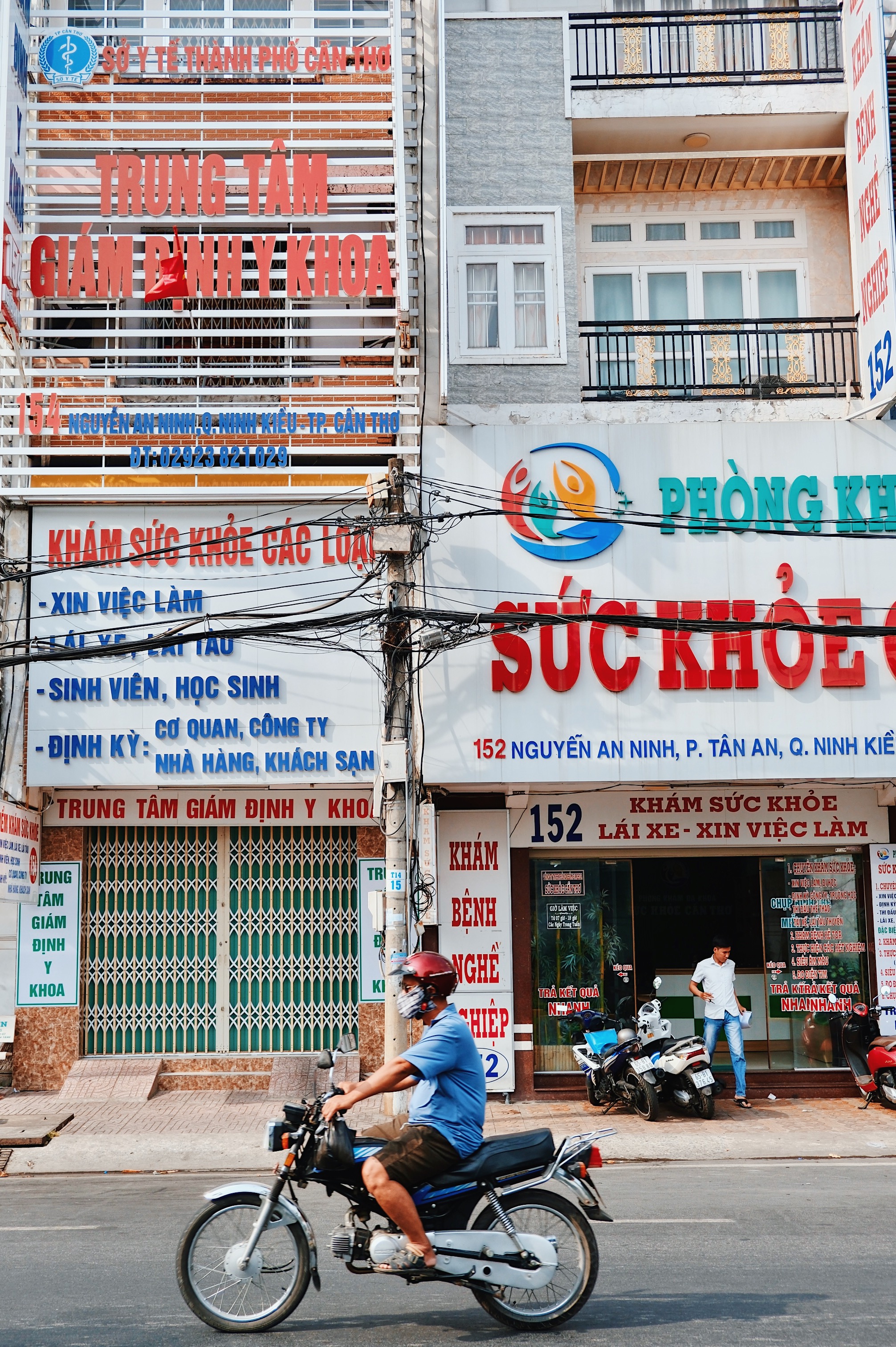
Walk any street in South Vietnam, and you’ll find at least 60 percent of the houses are modernist.1 Vietnamese people embraced the style to such an extent that it became their traditional architecture (yes, traditional). Such density and mass adoption presents a phenomenon unmatched anywhere else in the world.
Now, writing from a cybercafe in Ho Chi Minh City, I’ve returned to understand and pay tribute to this remarkable architectural achievement. For three weeks, I explored the Mekong Delta with my camera, hunting for modernist buildings. Through this article, I aim to explore why South Vietnamese modernism emerged, what makes it distinctively Vietnamese, and hopefully get you as excited about it as I am.
The Origins
For those less familiar with architecture, modernism is the most influential design movement of the 20th century. It symbolizes the transition to the industrial age, enabled by new materials such as concrete and steel. From a stylistic perspective, modernism embraces simplicity by showcasing the authentic nature of material rather than concealing it beneath excessive decoration. Think Le Corbusier or Frank Lloyd Wright.
In Vietnam, the modernist movement emerged after 1954, a pivotal year marking both the end of the First Indochina War and the country’s independence from French colonialism. The nation, devastated by conflict, needed urgent rebuilding.2
Modernism became the dominant architectural style for two main reasons. First, independence marked the rise of the first generation of Vietnamese architects, who were exposed to modernist ideas from around the world at the “École Nationale Supérieure des Beaux-Arts de l’Indochine” founded in 1925 in Hanoi.3 Second and most significant, modernism represented an act of resistance against colonialism, reflecting Vietnam’s aspiration to become a modern industrial nation. It symbolized freedom and optimism4—a radical rupture from the classical French colonial buildings.
But why specifically in the South? After independence, the Geneva Accords split Vietnam in two: the communist North under Hồ Chí Minh and the U.S.-backed South under Ngô Đình Diệm. North Vietnam spent most of its resources on the liberation of the South from the United States, prioritizing functional construction. Meanwhile, the South developed differently: the confidence of Vietnamese entrepreneurs for their country’s future, combined with American financial support, fostered an environment where architects could experiment freely. This created a modernist landscape of remarkable character and diversity.5
Distinctive Features
So, what makes South Vietnamese modernism unique? In its most simple definition, it is a tropicalized form of modernism but—and here’s what makes it stand out—made by the people, for the people.
Tropicalization was a practical necessity in Southeast Asia’s hot, humid climate. Architects created an array of elements—brise soleils, pergolas, louvers, sunscreens— for shading and airflow. Unlike the heavy, monolithic forms of global modernism, these elements were designed to be distinctively light and delicate.1,5 They formed an architectural vocabulary, an “alphabet” that could be combined in infinite variations, resulting in more complex—and sometimes even decorative—compositions than their international counterparts.2
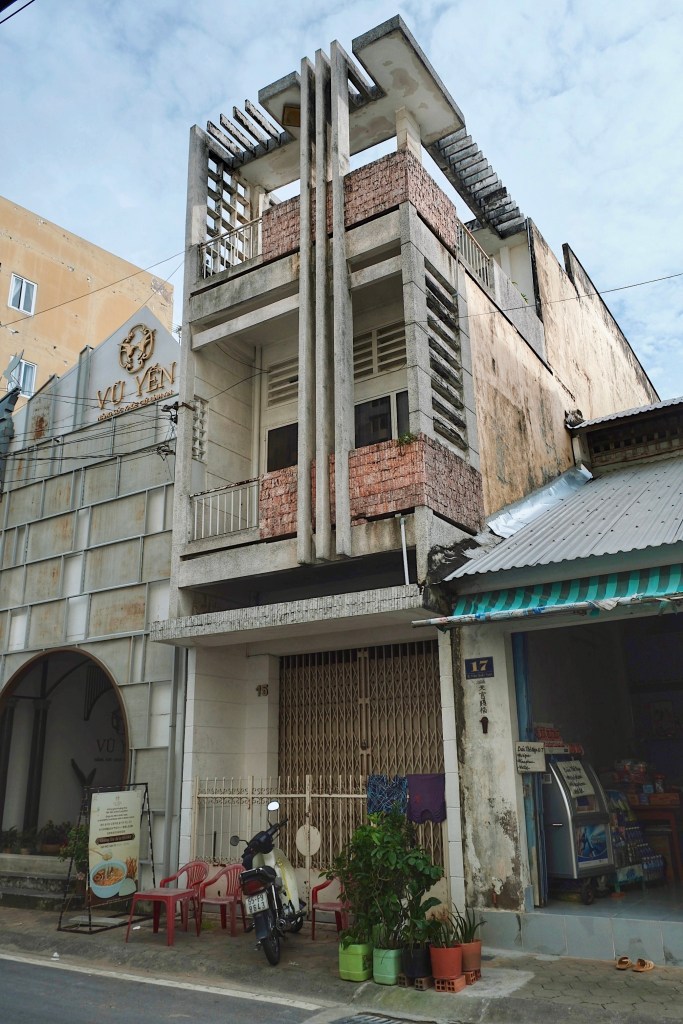
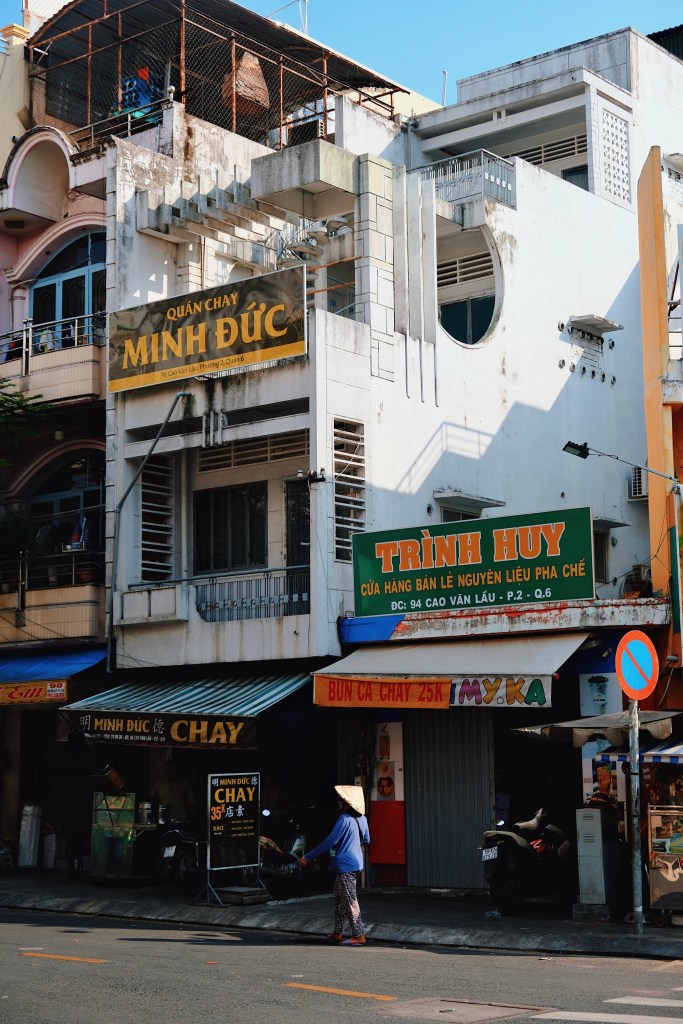
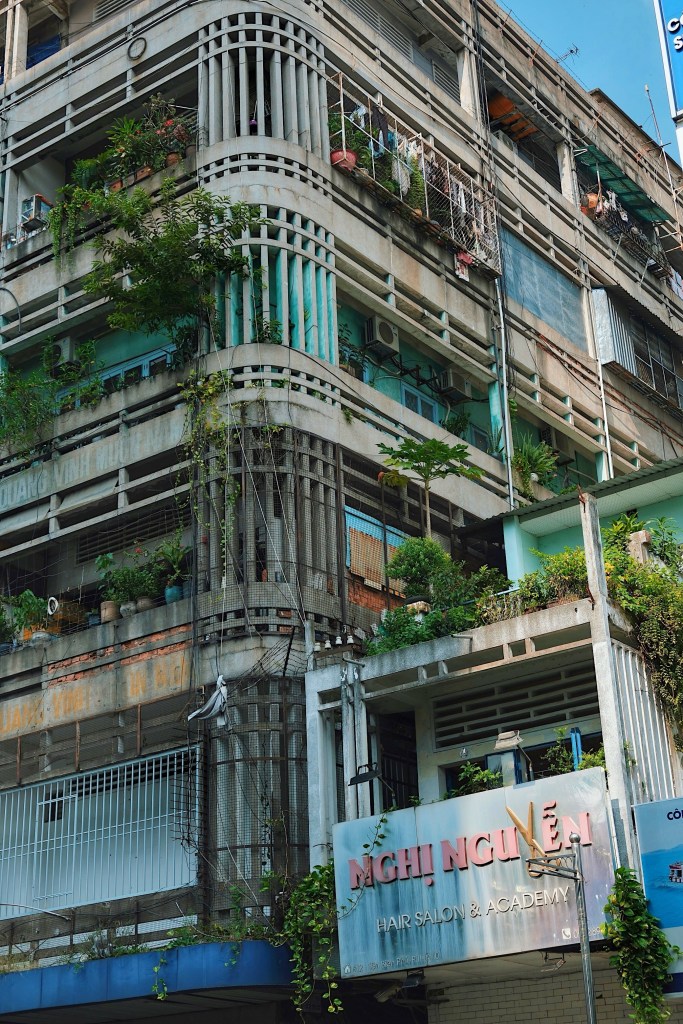
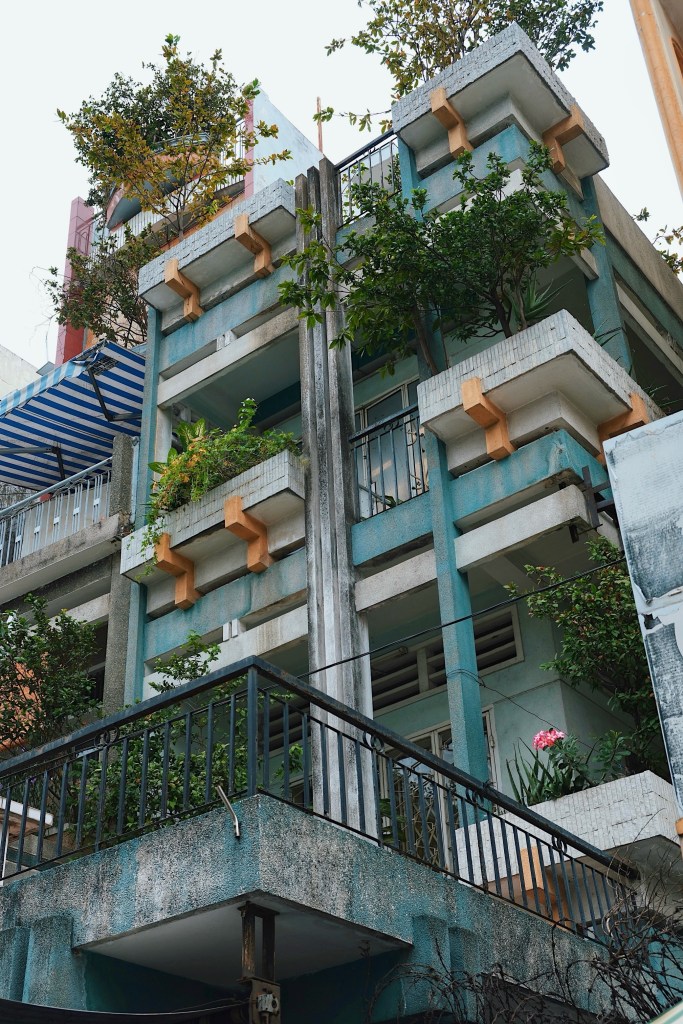
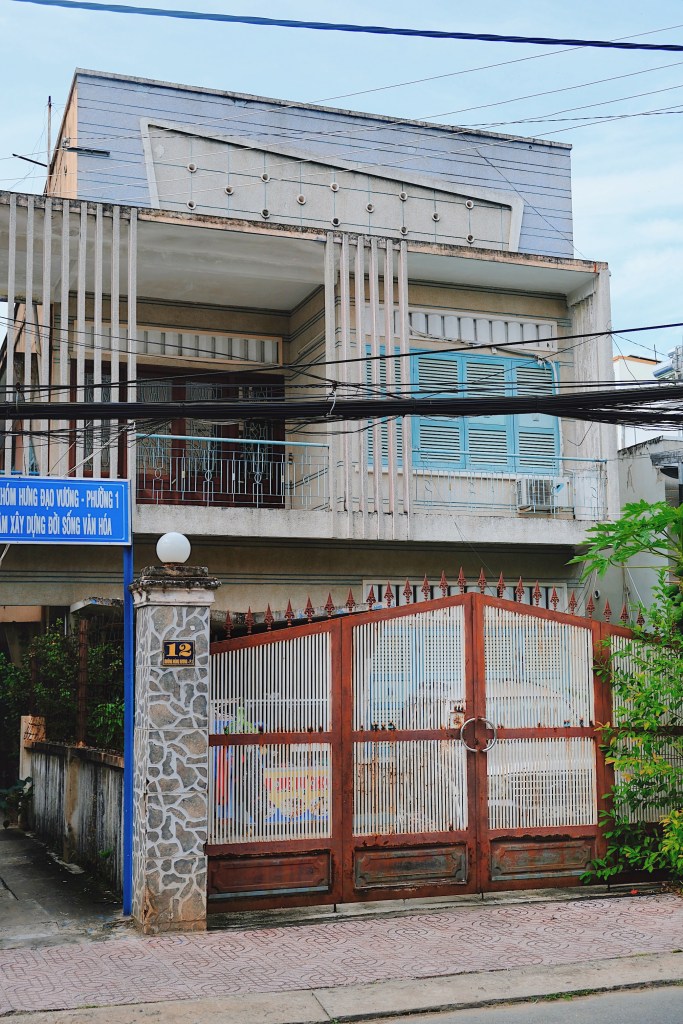
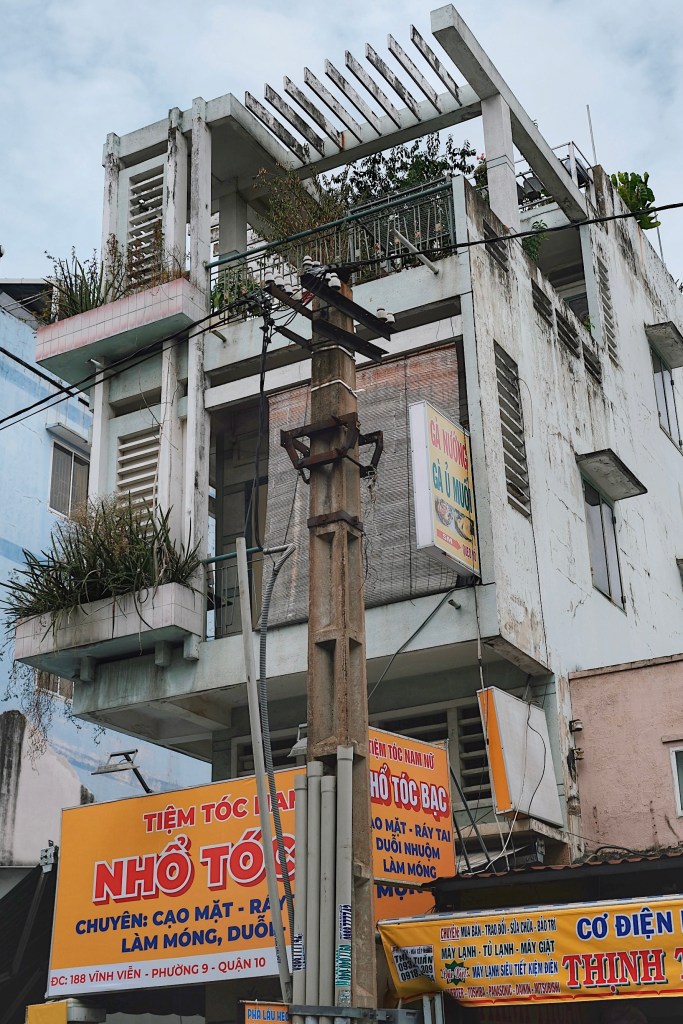
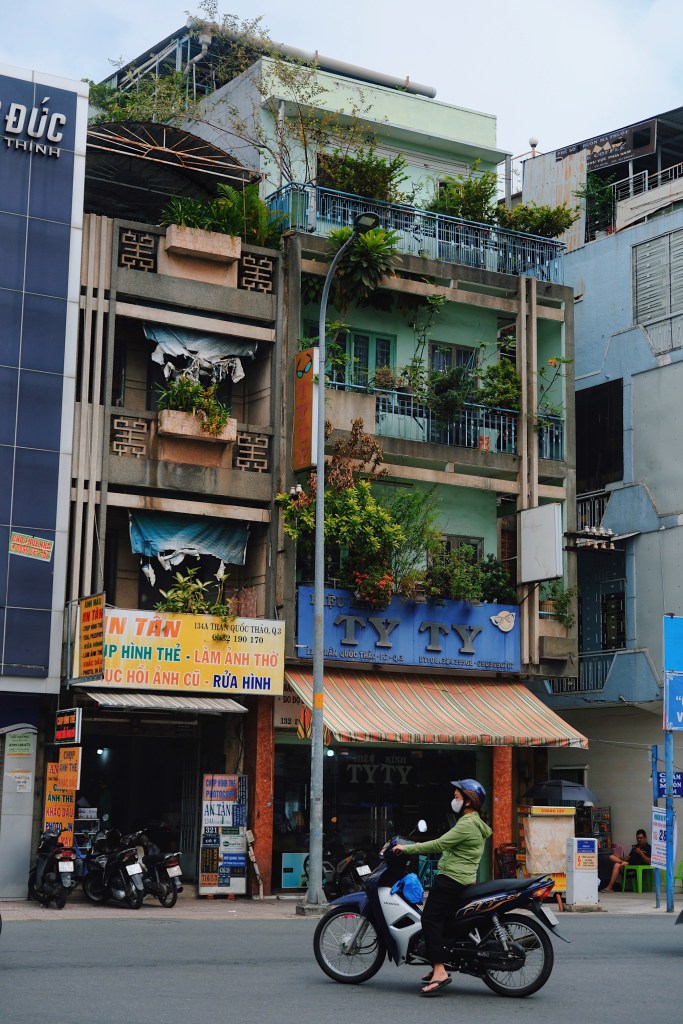
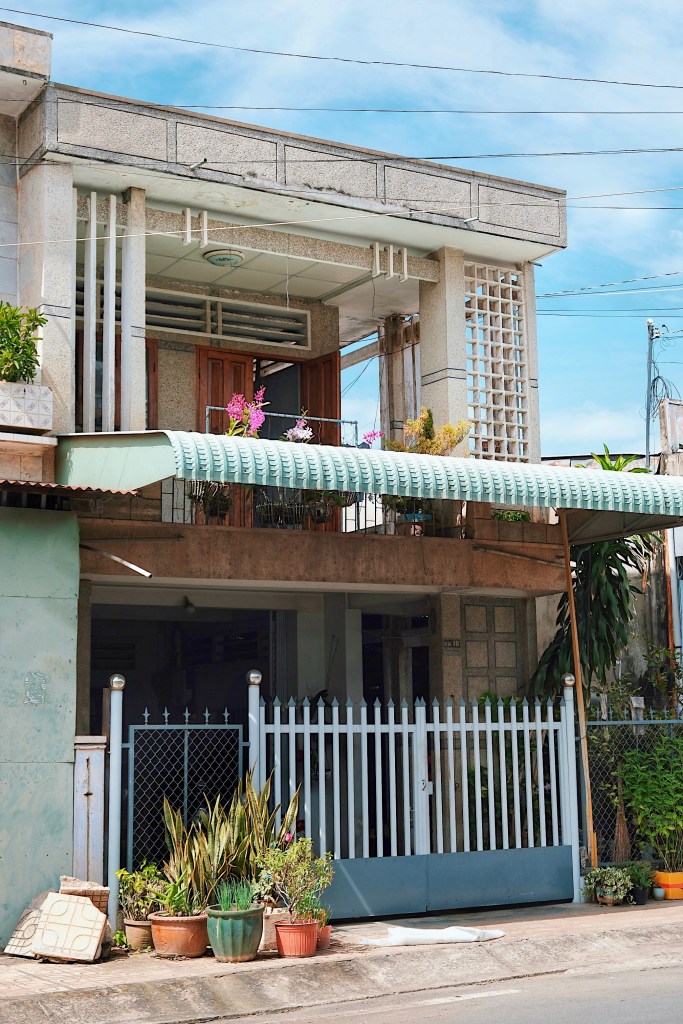
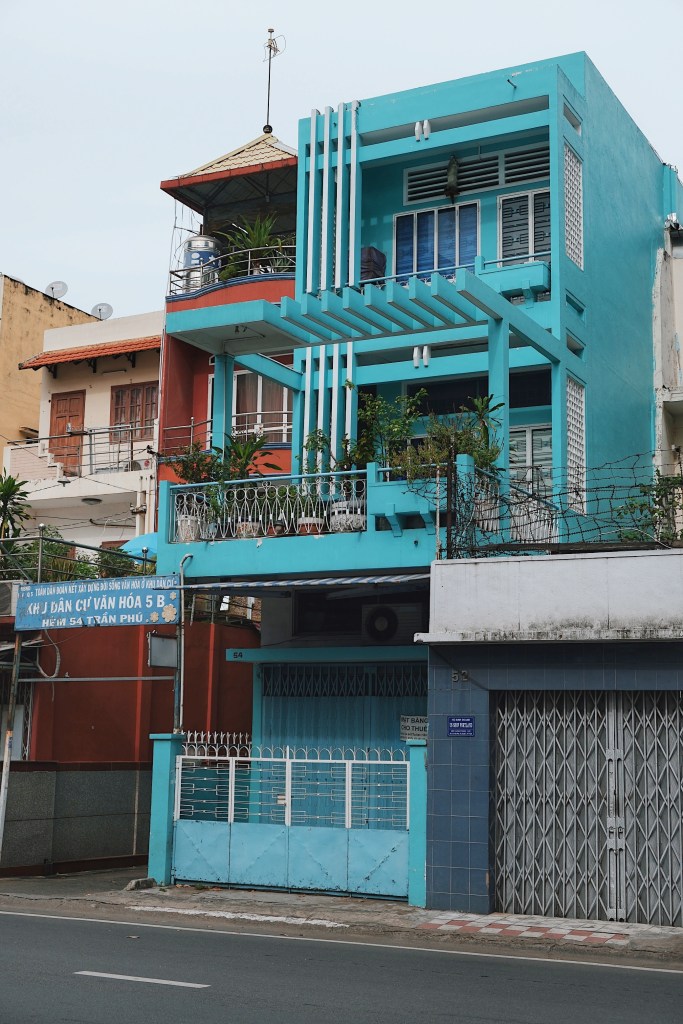
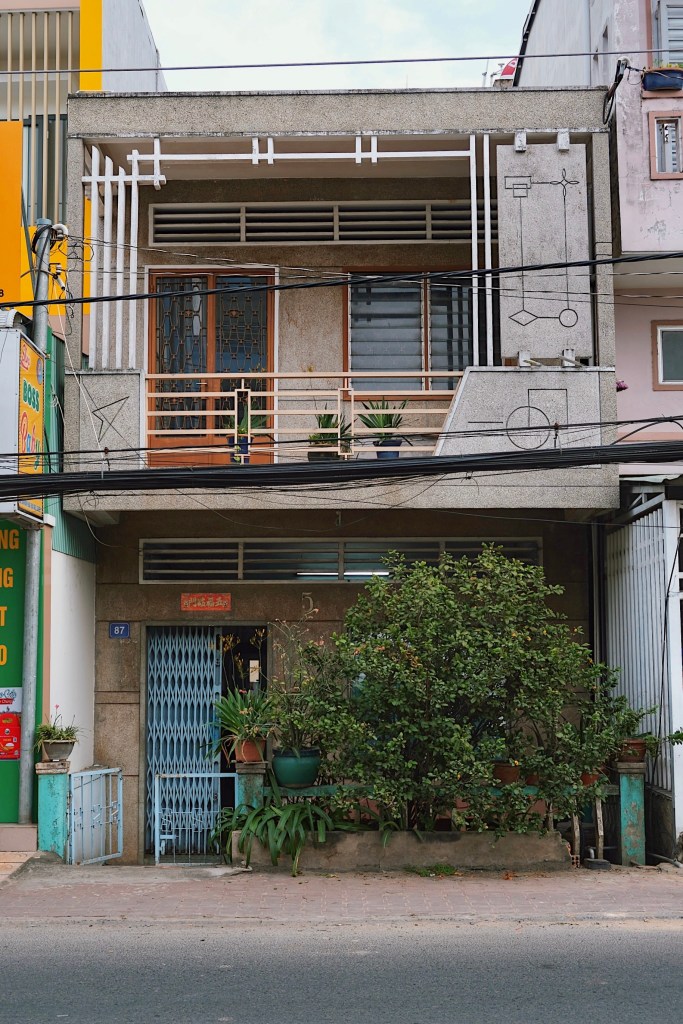
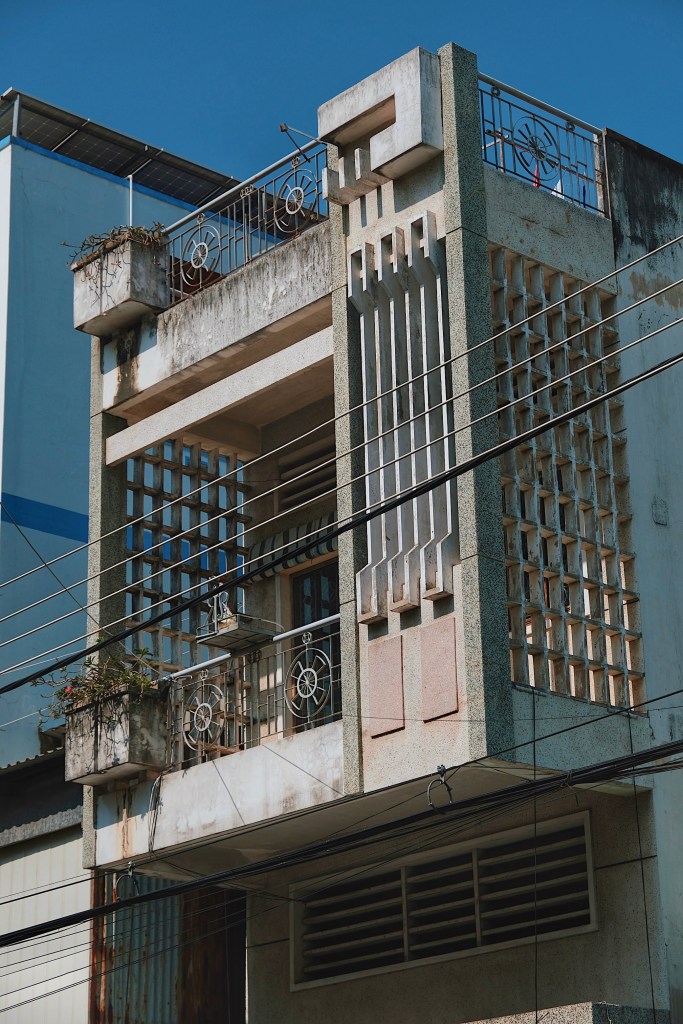
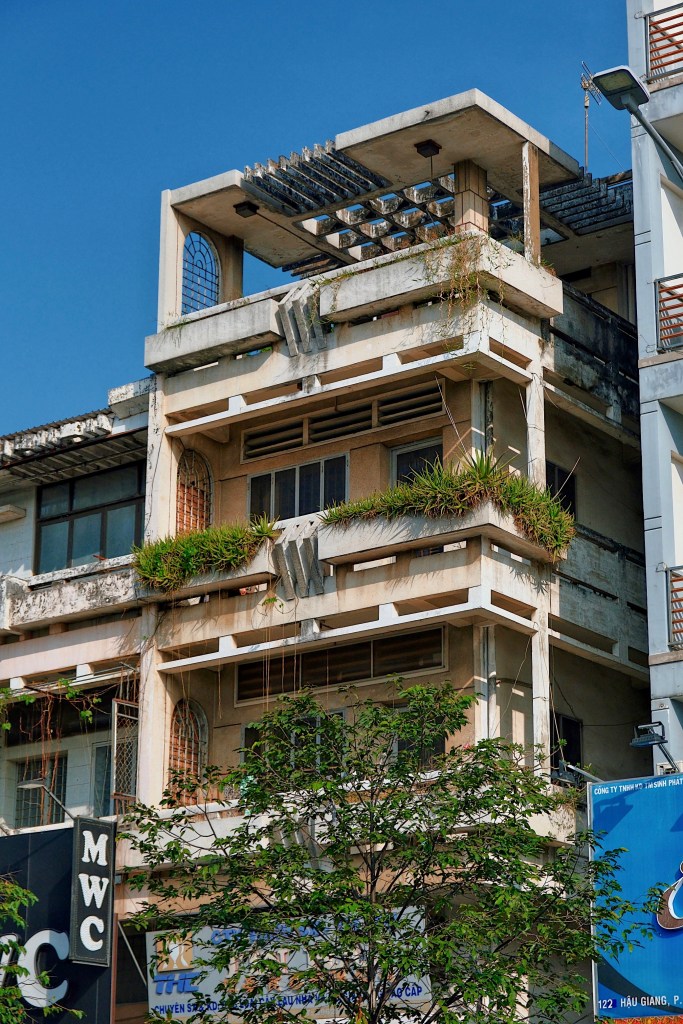
You can view my full collection of over 150 modernist building photographs here.
The second defining feature really sets South Vietnamese modernism apart—architecture made by the people for the people. Typically, modernist architecture is the domain of professional architects. But, in South Vietnam, most buildings constructed from the 1950s to 1970s were created by ordinary people, as there were few architects and they focused on official or larger-scale projects.2 The general public, seeing in modernism a symbol of progress and independence, adopted the modernist vocabulary established by architects, and made it their own.3 This makes sense; walking these streets, I found something more lively than the austere modernism I knew from Europe. It felt more human.
This popular embrace of modernism produced three distinct characteristics:
– More colors, vibrancy, even playfulness, than the minimalist global style.
– Variety and experimentation. Each house is unique and different, as homeowners crafted endless combinations of materials, lines and shapes, turning their homes into personal creative statements.2,7
– An extraordinary density of modernist buildings. Modernism rarely extends to everyday homes as it does in South Vietnam. Mel Schenck drew a fascinating conclusion: it has become the South’s vernacular (i.e. traditional) architecture, replacing the bamboo houses of the past.2 Locals always looked at me curiously when I would photograph their “ordinary homes”.
This is what makes South Vietnamese modernism truly moving: it has spirit. It embodies the intensity, progress and optimism of Vietnamese middle-class daily life. Because it was embraced by ordinary people, it achieved a poetic quality rarely seen elsewhere.2
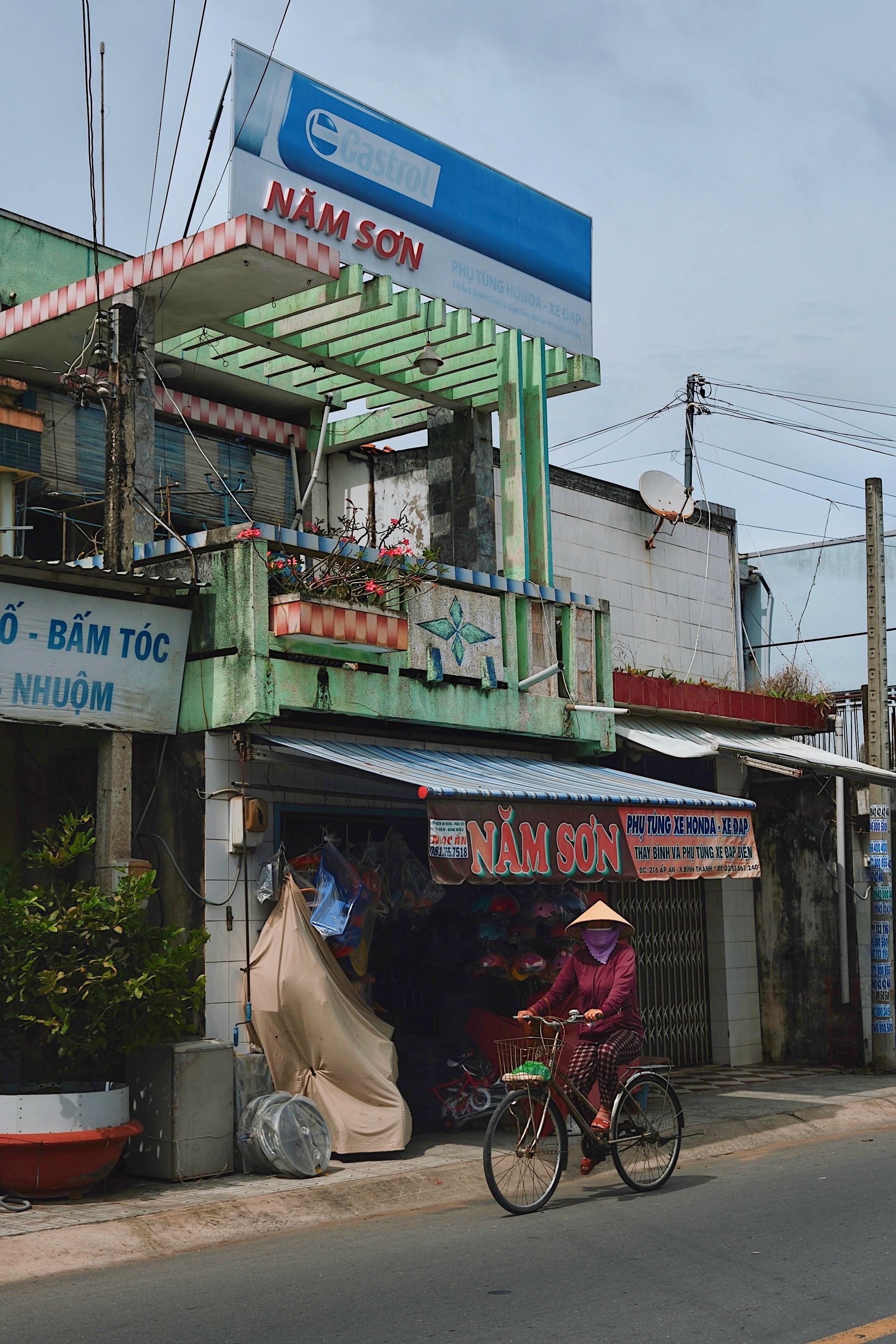
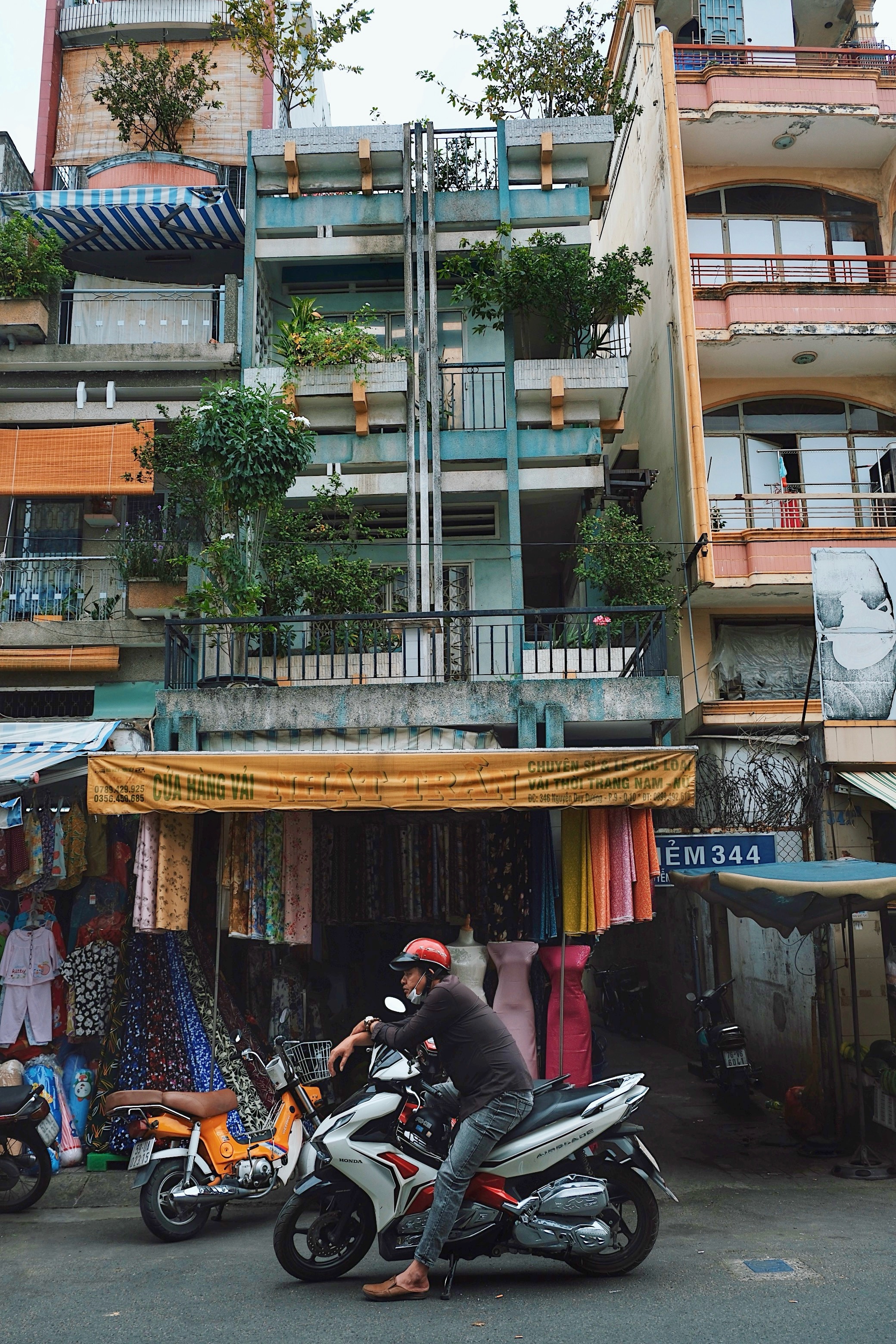

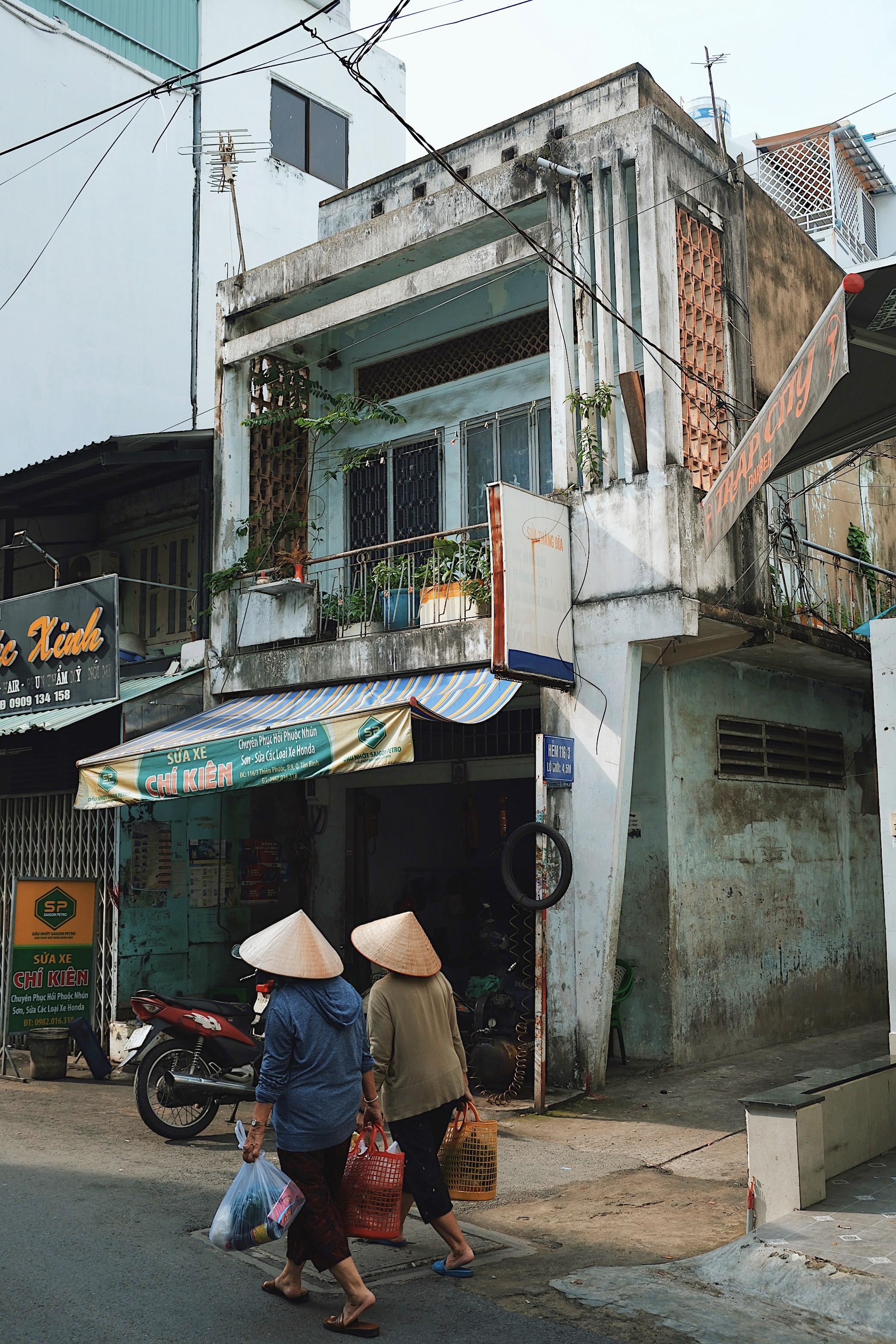
Mel Schenck remarked that the Vietnamese “make excellent design decisions” and I agree. I remember leaving an excited voice message to a friend “I can’t quite explain it, but they have taste—there’s a real aesthetic intention here”. While I know this observation is purely subjective, the experimentation within South Vietnamese modernism shows a deep engagement with design that cannot be denied: they care and they try. Take the careful color coordination between modernist buildings, their shops, and neighboring houses. Sometimes, just as I’m about to take a photo, someone rides by on a motorbike that matches the building perfectly. It’s as if they’re all secretly conspiring to make everything photogenic.

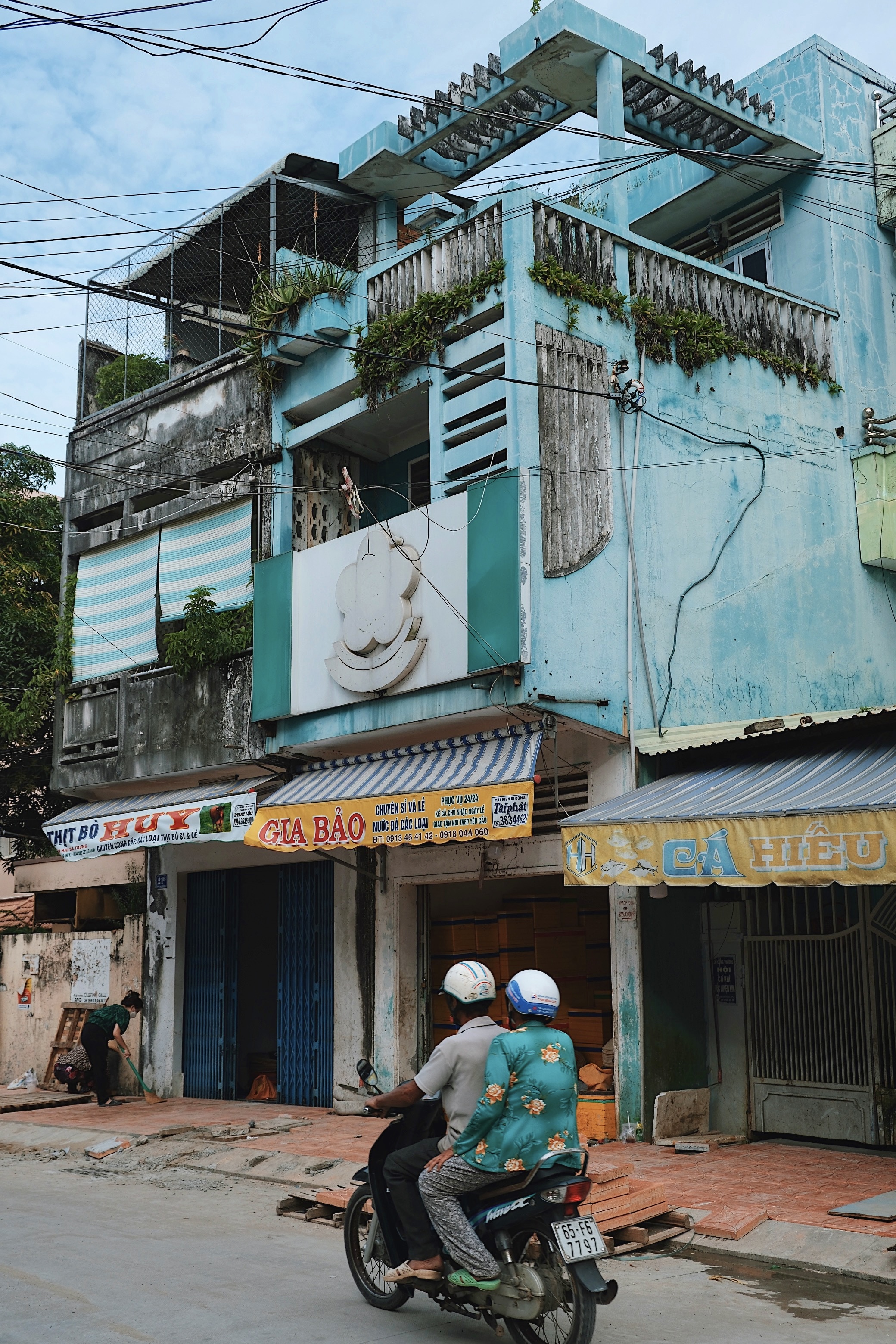
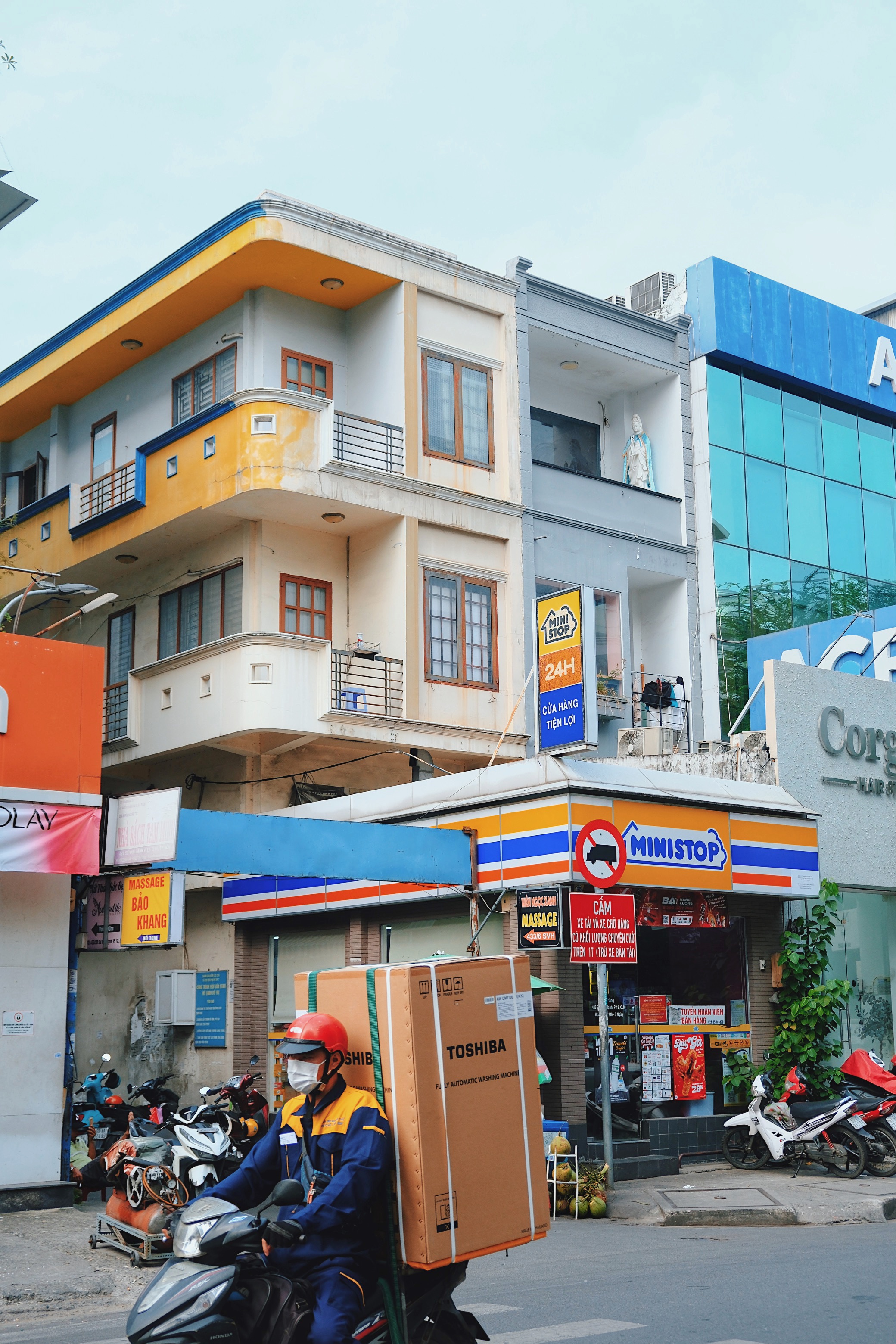
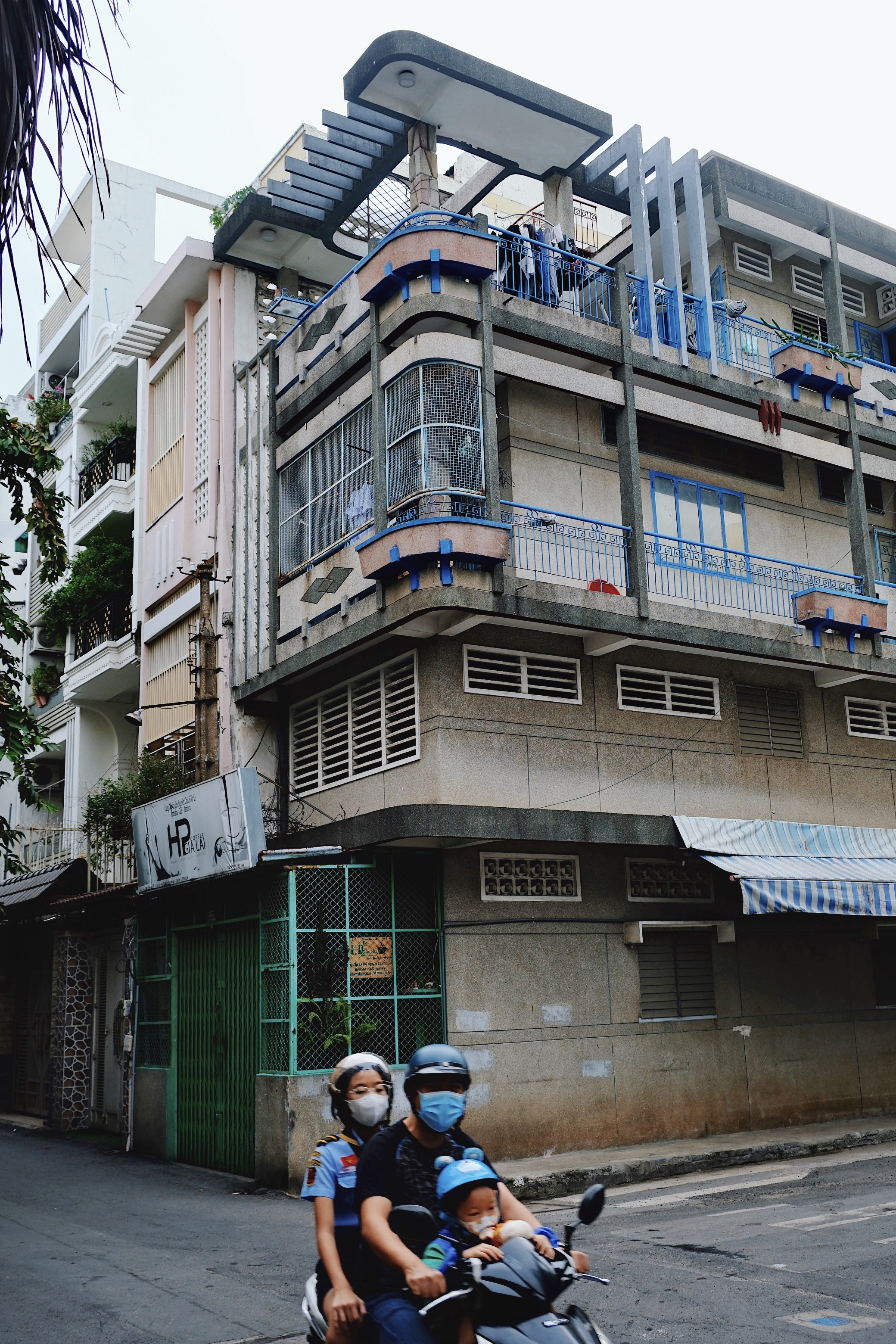
This experimental spirit has deep historical roots. Ho Chi Minh City and the Mekong Delta have long been trading hubs where sailors and merchants from around the world would stop. The South Vietnamese have always been exposed to new ideas, external influences. This openness to innovation, combined with the drive to express personal freedom after independence, further explains the experimental nature of their modernism.
Although I have only shown photos of city shophouses so far, this variety and creativity can also be found in countryside houses. They often feel slightly more decorative, as their size allows for more repetition of patterns and shapes.
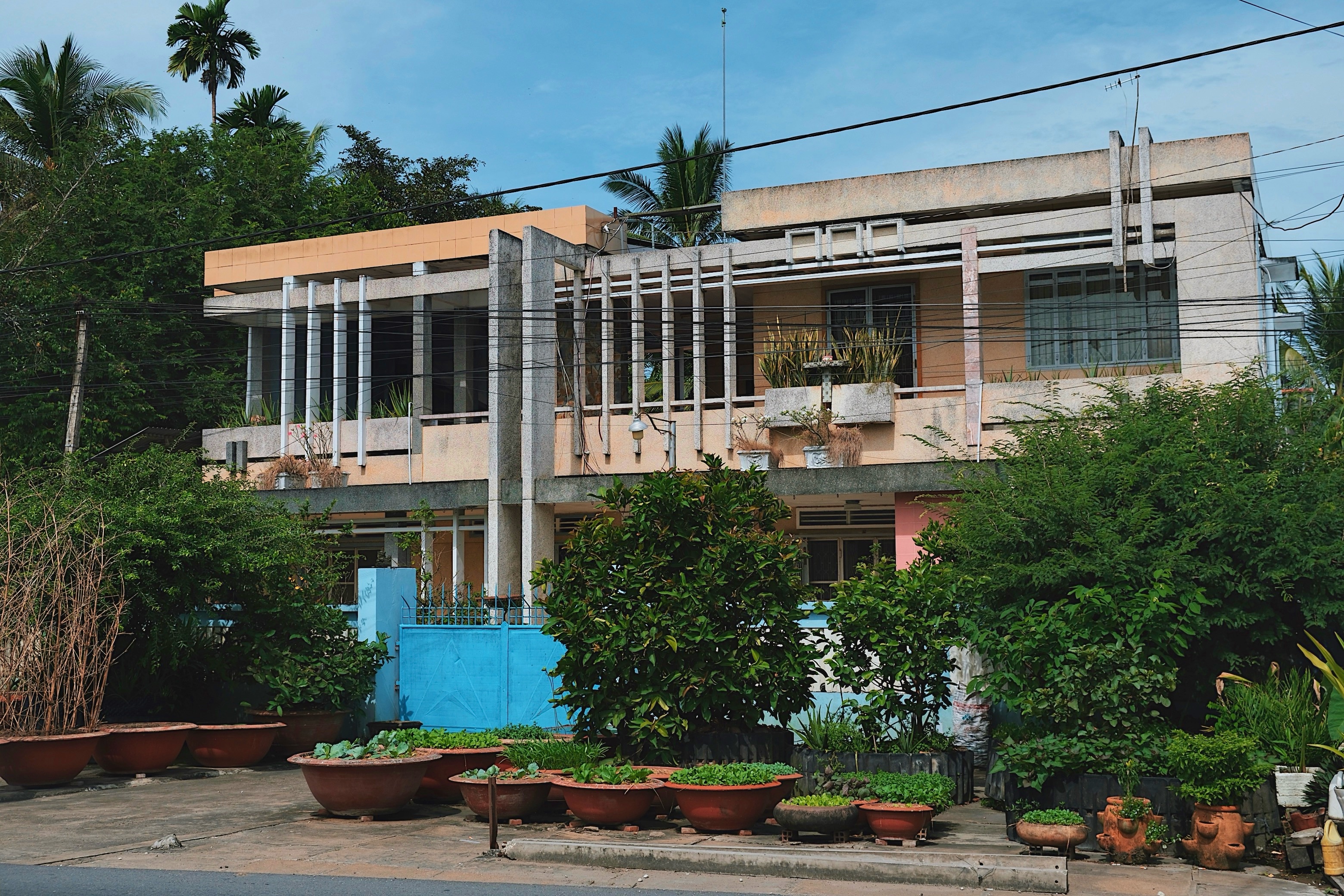
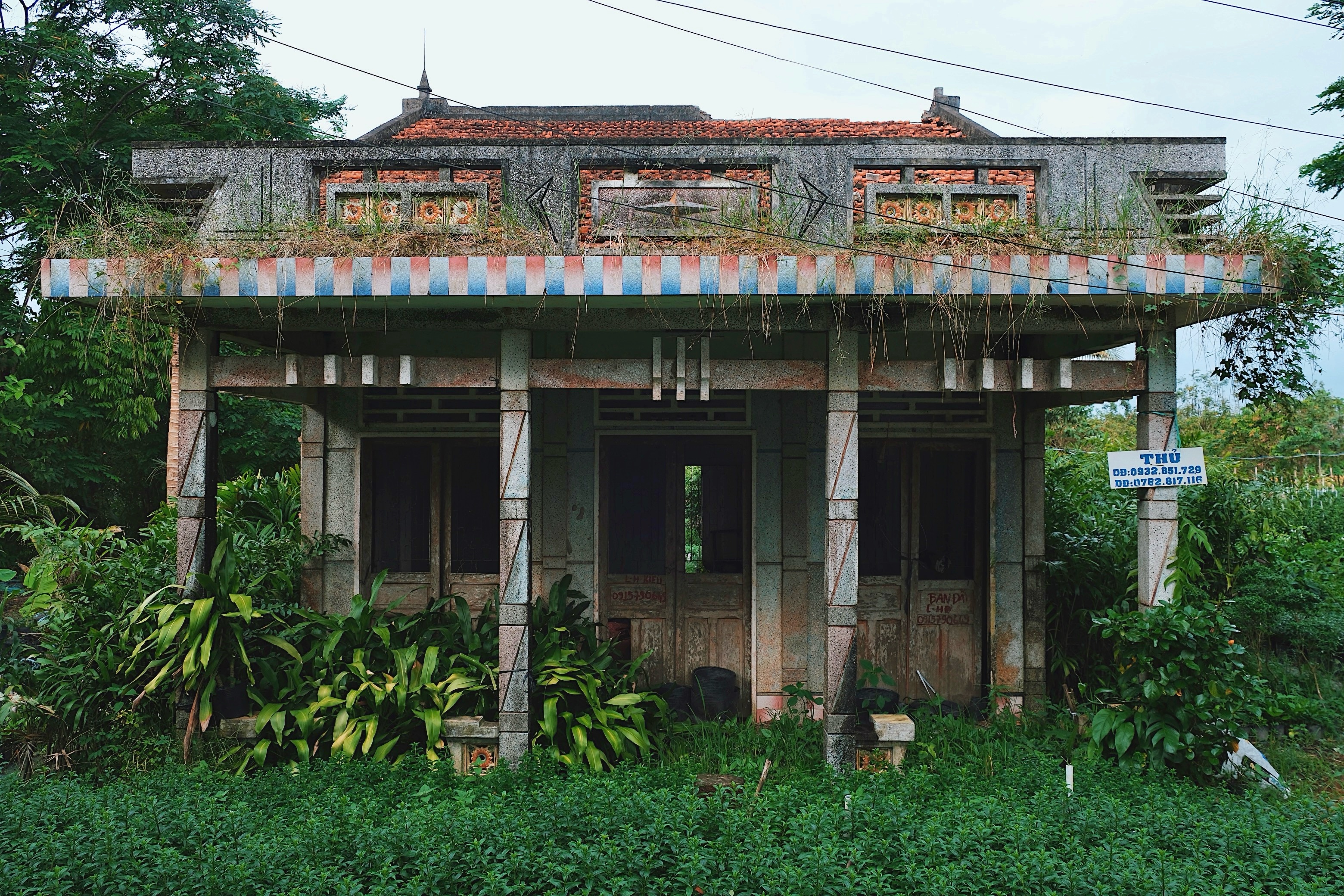
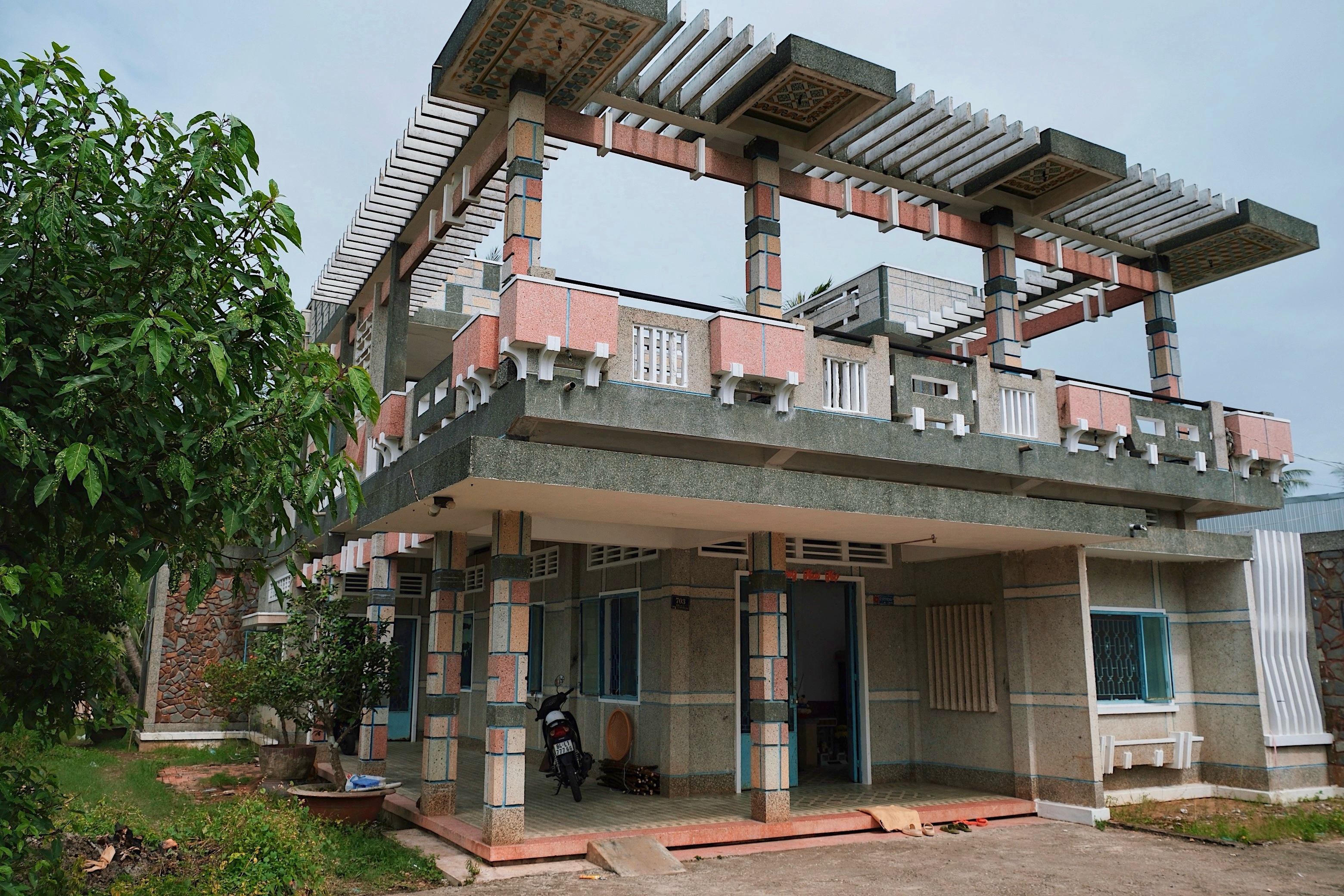
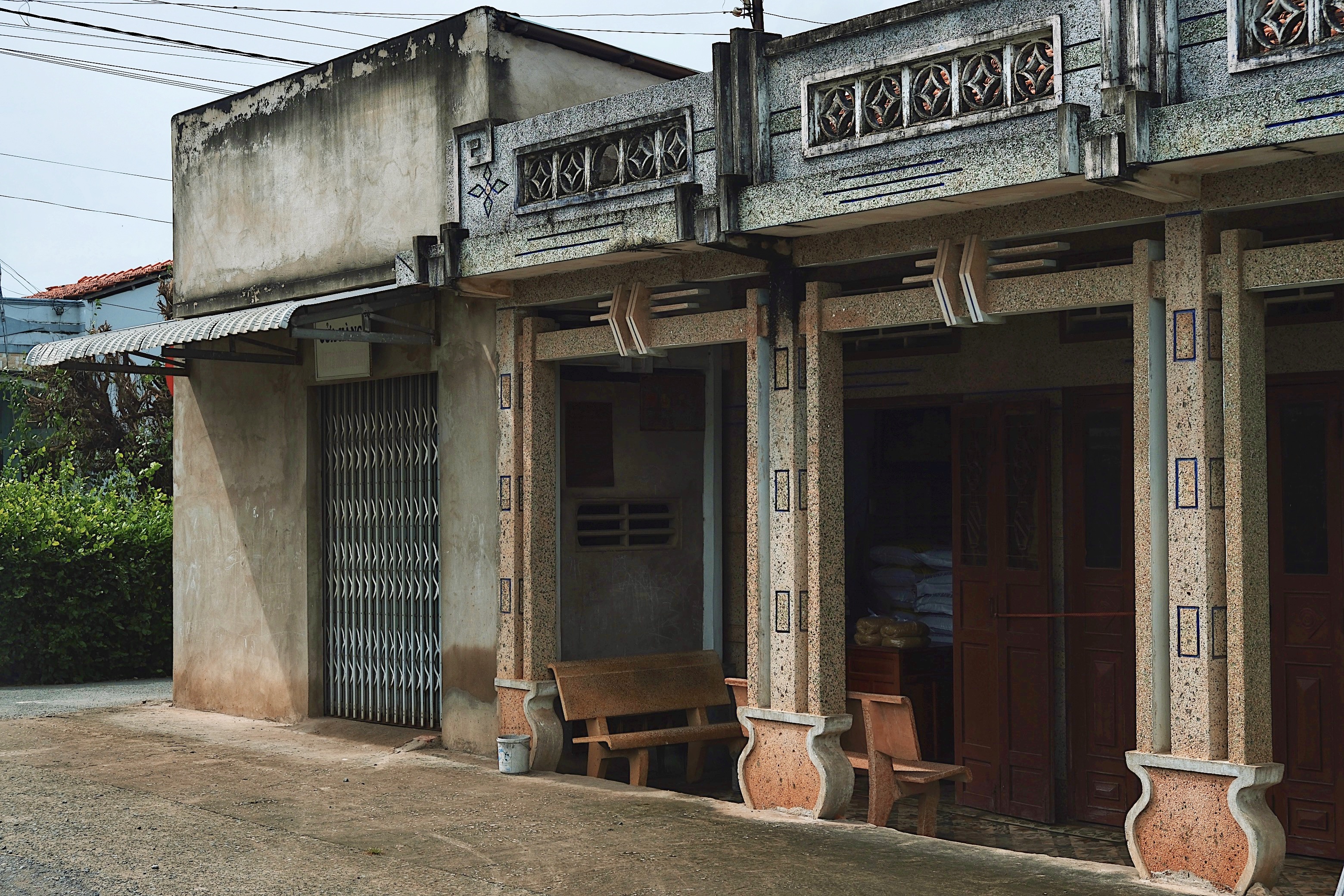
Rural modernist villas in Vinh Long, Ben Tre, and Sa Dec.
While exploring these modernist variations across Vietnam, I wondered why I didn’t have the same impressions during my travels in Laos and Cambodia—also former French colonies.
Laos’ economic development has been limited, constraining its architectural evolution. Cambodia, meanwhile, created its own form of modernism: “New Khmer Architecture”. This style draws heavily from the country’s religious heritage, particularly temple architecture. Indeed, with Angkor Wat—the world’s largest religious monument and eighth wonder of the world—as a cultural backdrop, it was only natural for Cambodian architects to explicitly incorporate iconic elements into their designs. South Vietnamese architects, operating in a more secular economy, took a more abstract approach. Unburdened by strong religious architectural traditions, they could experiment more freely.1,3
The State of Today
As I walk today in Ho Chi Minh City’s streets, Vietnamese modernism is clearly alive: new interpretations of the style emerge at every corner, and construction sites reveal fresh modernist houses taking shape. Old and recent buildings stand side by side, animated by hundreds of buzzing motorbikes, creating a “harmonious chaos” that perfectly captures Vietnamese urban life’s intensity.
Yet globalisation has inevitably transformed Vietnamese streets. Minimalist international-style buildings are increasingly common, making the architectural landscape more pluralistic. Most notably, commercial signs have grown bolder and bigger, sometimes engulfing whole facades. I could write another entire essay about them. Their sheer size and exuberance inject a pop flavor into the otherwise raw modernist landscape. What fascinates me most is their use of the Latin alphabet—Vietnam’s shared script with the West. While large Chinese or Japanese characters feel expected in Asia, there’s something paradoxically exotic about seeing familiar letters used with such ostentation.
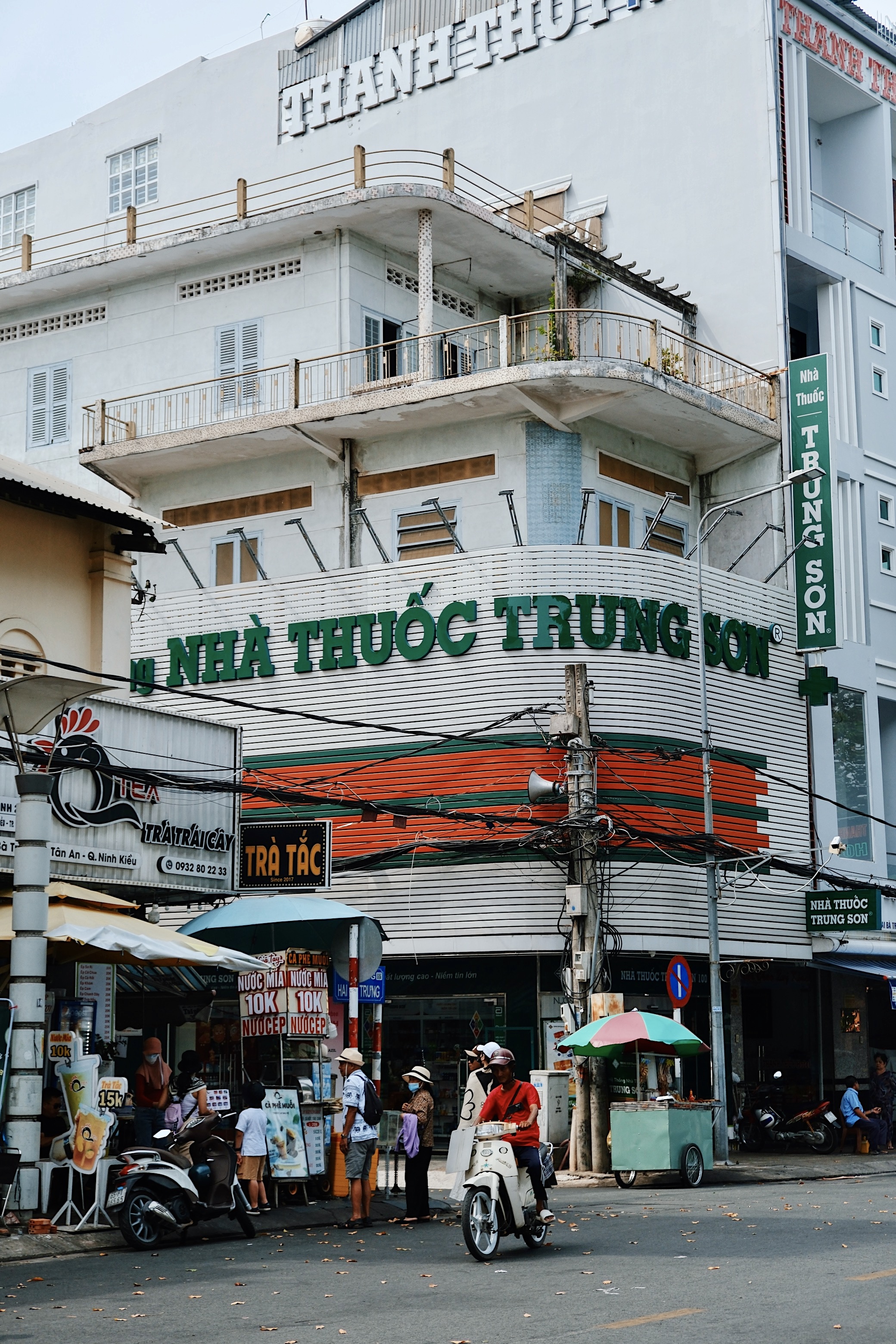
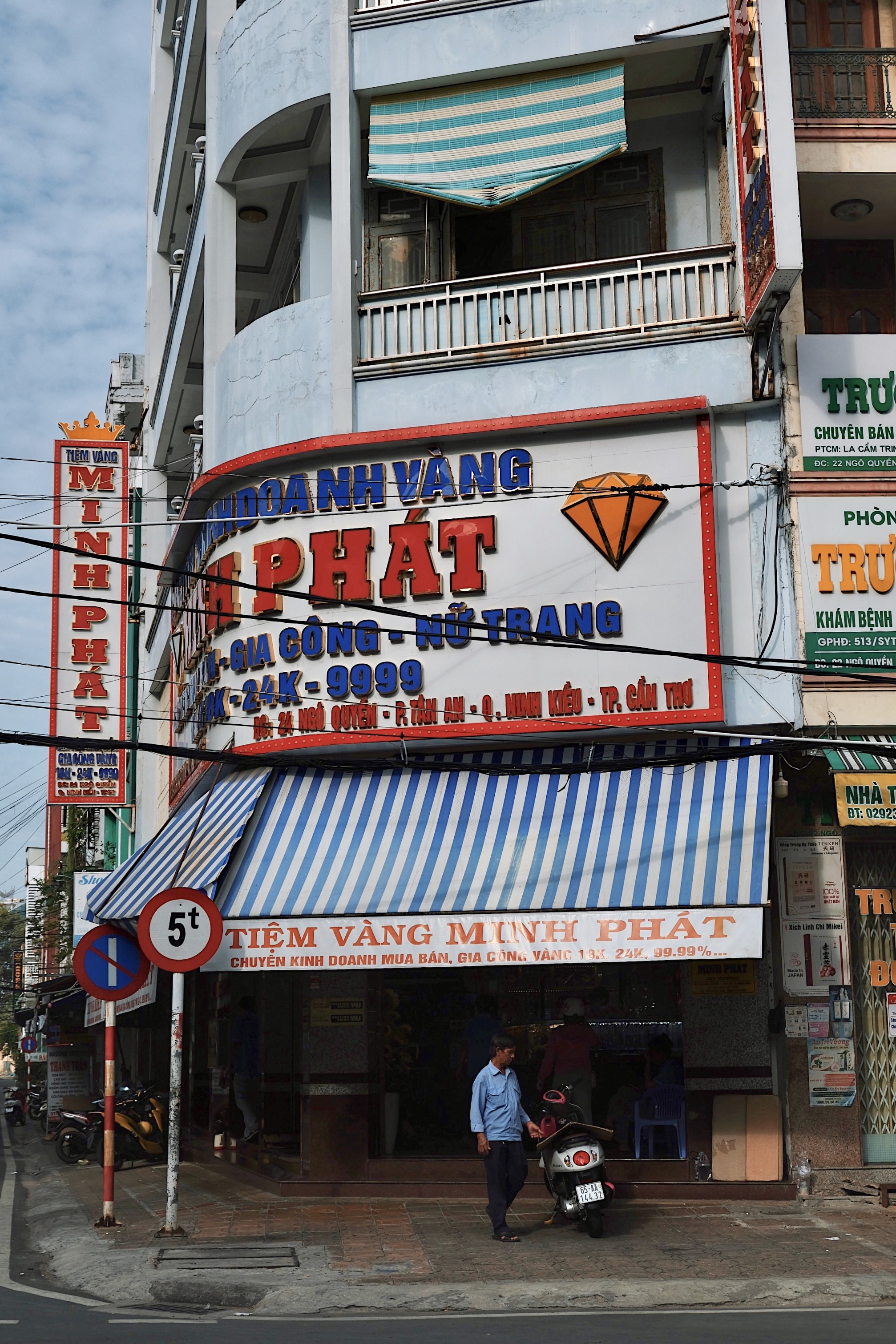
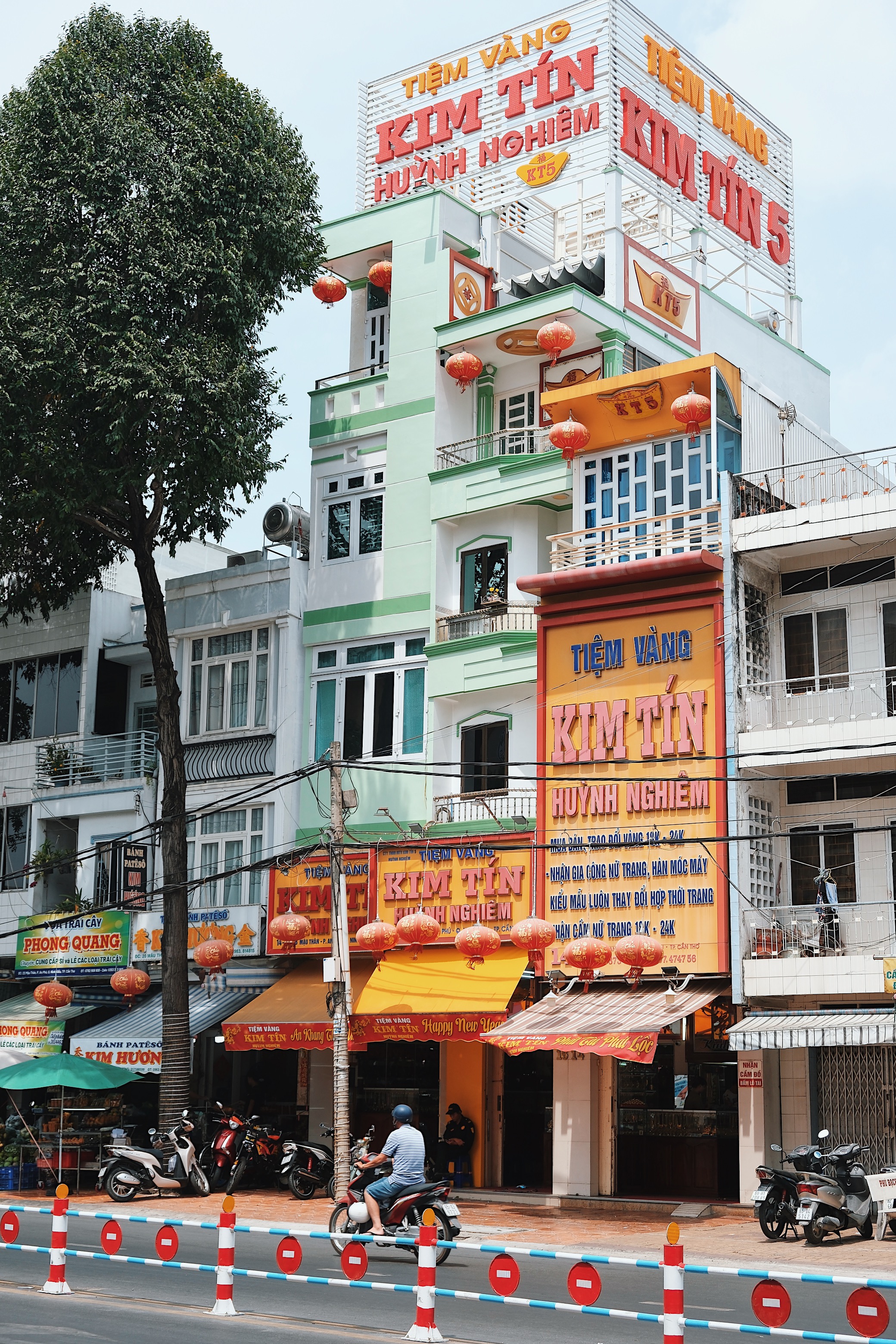
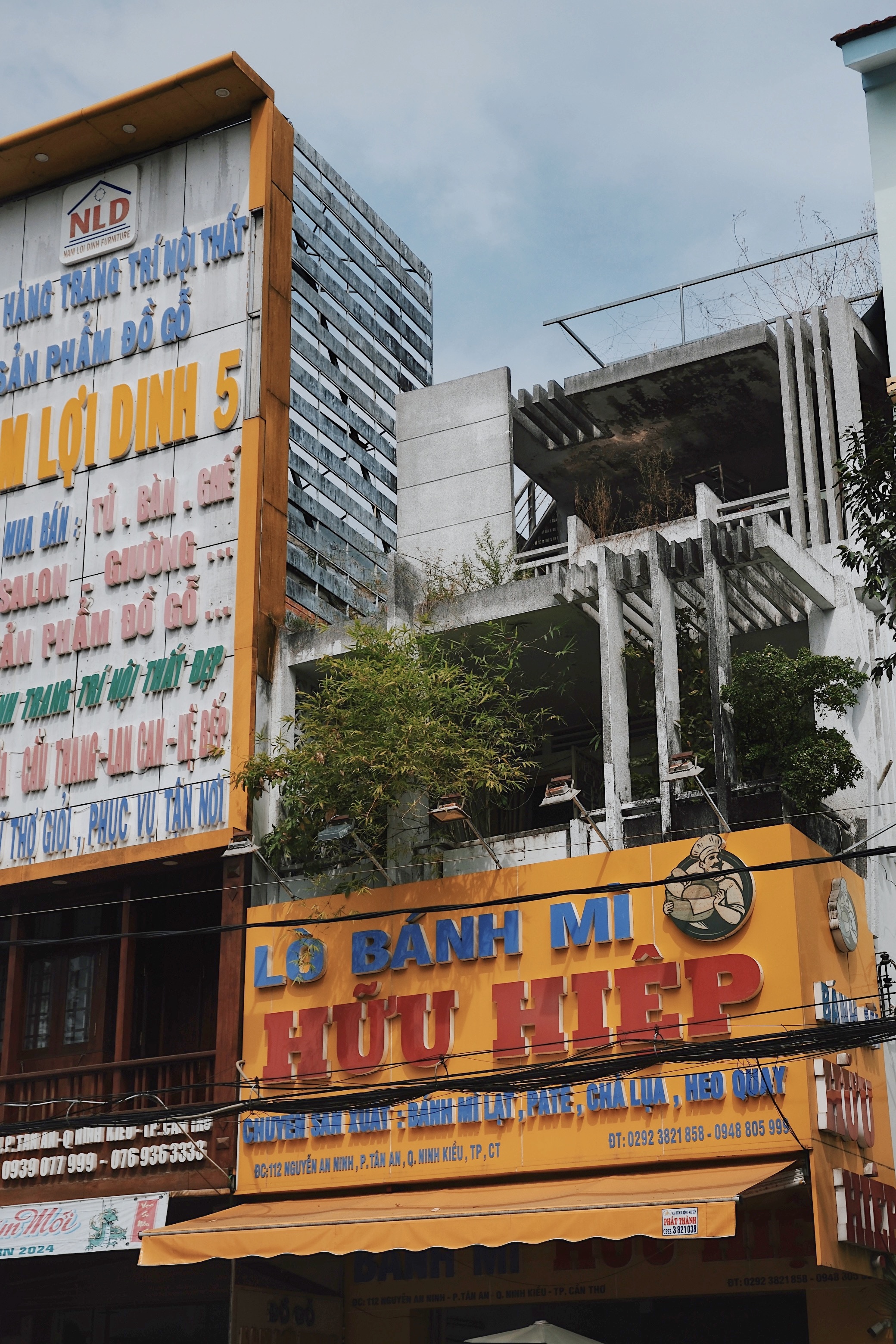
The most extravagant examples belong to jewelry stores and dental clinics, with oversized, flashy signs competing for attention—both likely signals of wealth and status. Sometimes, these signs are designed with slats, fulfilling the purpose of a brise soleil, a smart “2–in–1” solution that showcases Vietnamese pragmatism.
These signs are another testament to the Vietnamese spirit of optimism: an unapologetic, loud cry for progress, so enthusiastic it often borders kitsch. Like China, Vietnam may be communist in ideology, but this doesn’t seem to translate in its market economy.
The modernist buildings act as a sophisticated canvas for these bold commercial interventions. The result is eclectic and experimental, hence quintessentially Vietnamese. Walking these streets is like scrolling through a giant TikTok feed: a constant overstimulation of the senses, a joyful mess that gives Vietnam its unique charm.
Final Thoughts
Modernist architecture, I understand, isn’t to everyone’s taste. But through this article, I hope to have drawn attention to this overlooked architectural heritage. When you next walk the streets of South Vietnam, just notice. Notice the variety, the colors, textures and shapes. Notice and know that what you are seeing aren’t just structures—they’re a living testament to Vietnamese culture.
As for me, I’ve finally understood the source of my fascination with South Vietnamese modernism. I was raised in Louvain-La-Neuve, a Belgian town built from scratch in the 70s to host the Université Catholique de Louvain. This university town is predominantly modernist, featuring brutalist masterpieces like the Ancienne Bibliothèque des Sciences by André Jacqmain (currently being considered for heritage classification).

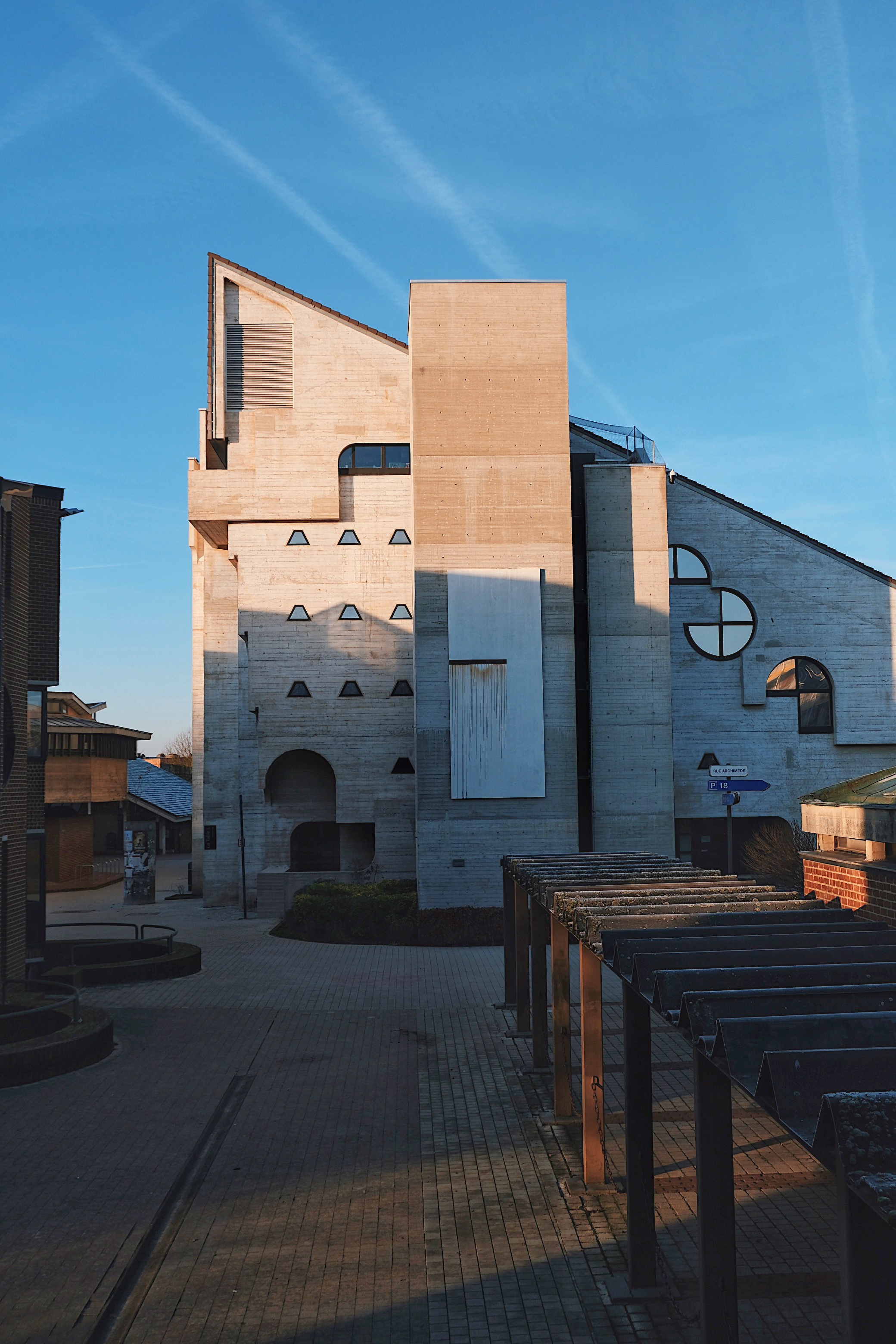
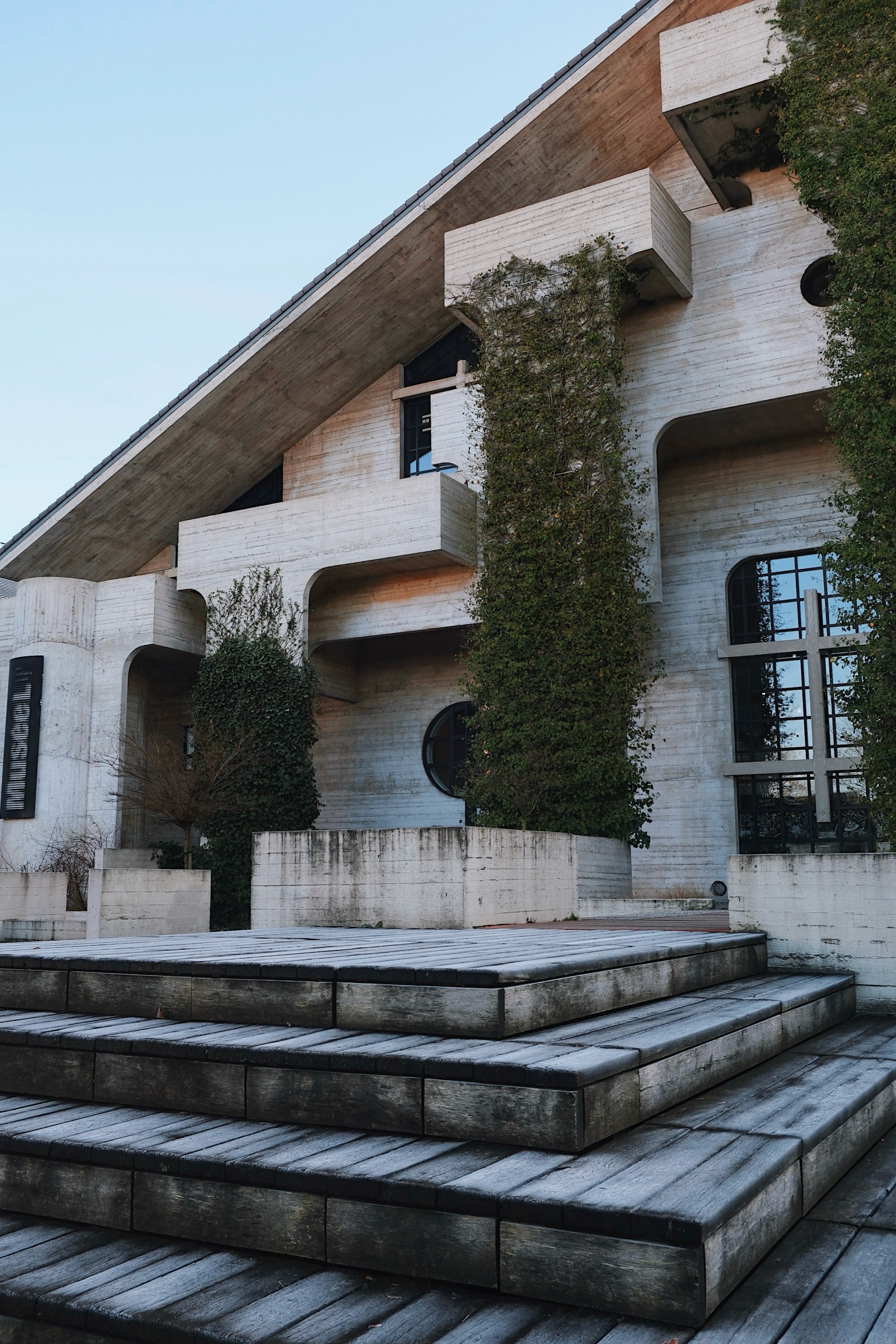
Many Belgians criticize Louvain-La-Neuve, saying “all the buildings look the same”. But this view is superficial: look closer and, behind the uniform red brick facades, you’ll discover endless variations in shape, form, and volume, especially in the scientific upper town. Multiple architects were deliberately commissioned to ensure design diversity, turning Louvain-La-Neuve into a playground for modern architectural experimentation. A study on Louvain-La-Neuve highlighted its narrow, canopied streets that protect from rain and sun, small plots encouraging architectural diversity, and high-density low-rise buildings with interlocking courts8—all features that mirror the labyrinth of modernist shophouses in Southern Vietnamese cities.
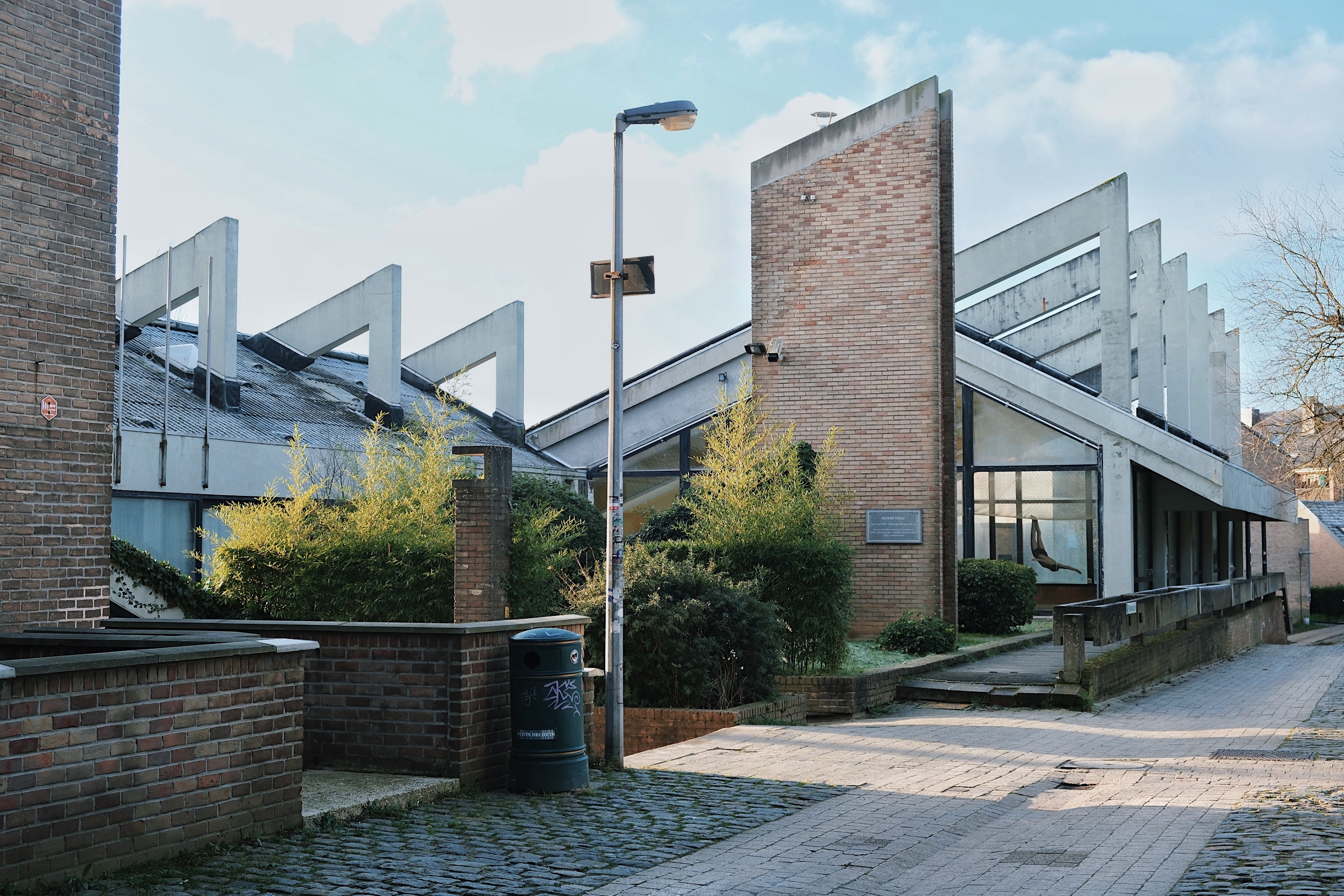
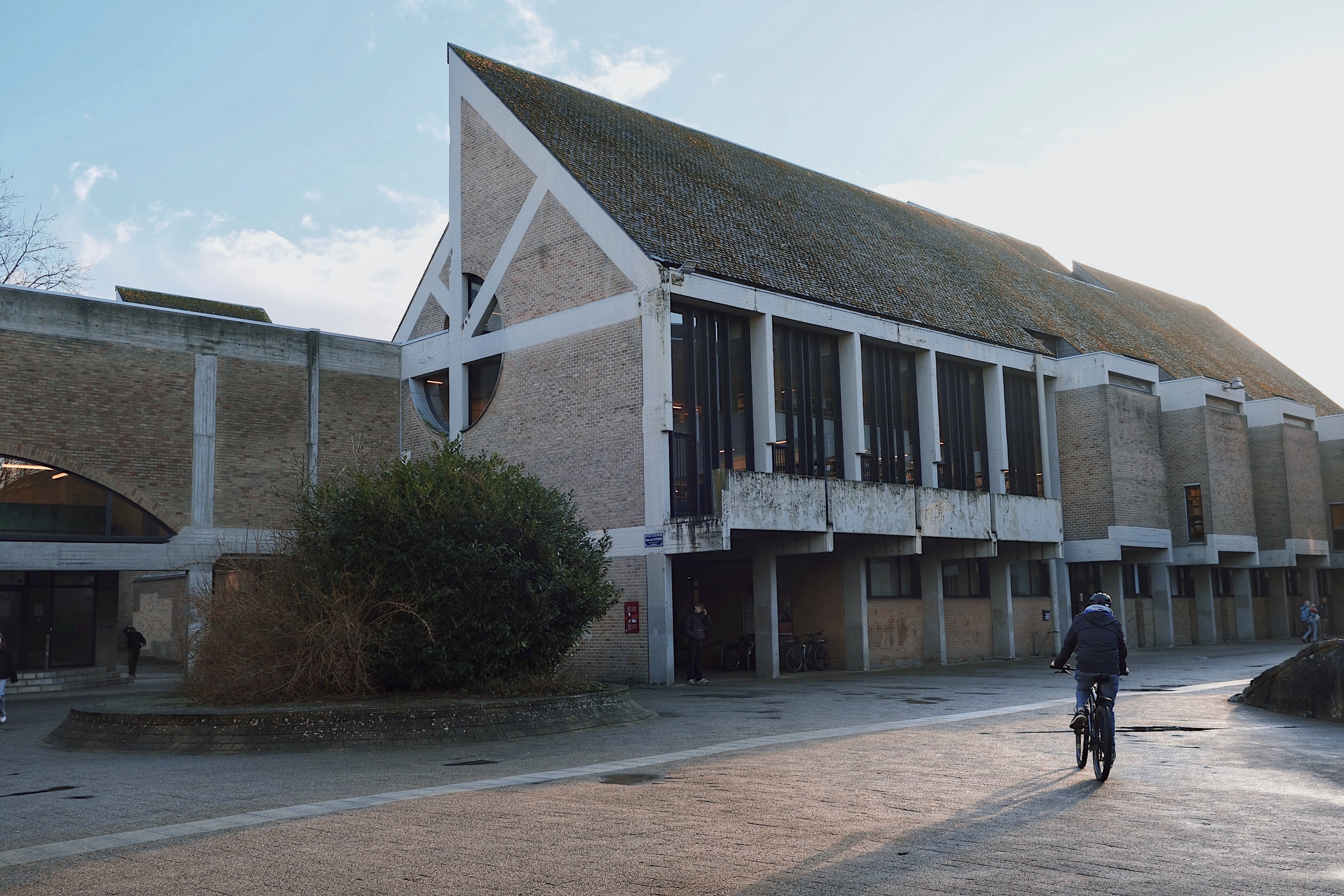
Blocry’s swimming pool and the Bibliothèque des Sciences Economiques, Sociales, Politiques et de Communication.
It pains me to hear so many compatriots dismiss it as “an ugly student town”. To me, it’s another overlooked gem, another rare example of modernism fully and humanly embraced.
Perhaps what I found in South Vietnam is a tropical, more colorful version of home.
Alexandra van der Essen is a renowned architecture photographer and expert in… Just kidding! I have neither the expertise nor legitimacy to talk about myself in the third person. In fact, I’m not an architect or professional photographer – just a traveler who accidentally fell in love with Vietnamese modernism and felt compelled to document it.
I want to warmly thank Mel Schenck, whom I had the privilege to meet in Ho Chi Minh City. Our conversation provided invaluable insights for this article. For readers interested in a deeper exploration of Vietnamese modernism, I highly recommend his book “Southern Vietnamese Modernist Architecture: Mid-Century Vernacular Modernism,” which offers comprehensive research on the topic.
I’m also grateful to Nguyen Ngoc Son from the Faculty of Architecture in Ho Chi Minh City for inviting me to attend the conference “Nguyen Quang Nhac: The Life of a Vietnamese Architect”, celebrating the centenary of this key figure’s birth. The presentation offered a rich cultural immersion into Vietnamese architecture.
Sources
1Schenck, Mel. “How Vietnam Created Its Own Brand of Modernist Architecture.” The News Lens, 2017. https://international.thenewslens.com/article/65288
2Phạm, Phú Vinh. “The Vietnamese Brand of Modernism.” Southeast Asia Globe, 2021. https://southeastasiaglobe.com/vietnam-modernist-architecture/
3Schenck, Mel, and Alexandre Garel. “Southern Vietnamese Modernist Architecture: Mid-Century Vernacular Modernism.” Architecture Vietnam Books, 2020.
4Tipler, Kate. “More Than Just an Identity, Saigon’s Modernist Architecture Reflects Past Optimism for a New Era.” Saigoneer, 2018. https://saigoneer.com/da-lat-travel-guide/society/society-categories/14870-more-tha n-just-an-identity,-saigon-s-modernist-architecture-reflects-past-optimism-for-a-new-er a
5Pham, Thuy Loan, and Truong Ngoc Lan. “Modern Architecture in Vietnam or Vietnamese Modern Architecture?” Docomomo Journal 57, 2017.
6Phạm, Phú Vinh. “Decoding the Language of Vietnamese Modernist Architecture.” Saigoneer, 2021. https://saigoneer.com/vietnam-architecture/20506-decoding-the-language-of-vietnam ese-modernist-architecture
7Schenck, Mel. “Historical tradition of modernist architecture in Vietnam” Antidote to Burnout; Return to Design and Construction in Vietnam, 2007. https://layered.typepad.com/antidote_to_burnout/2007/11/historical-trad.html
8Laconte, Pierre. “The Founding and Development of Louvain-la-Neuve, the only new town in Belgium”. In Carola Hein (ed.) International Planning History Society Proceedings, 17th IPHS Conference, History-Urbanism-Resilience, TU Delft 17-21 July 2016, V.05 p.211, TU Delft Open, 2016.


Leave a comment